NeoGraft Red Light Therapy in Pittsburgh
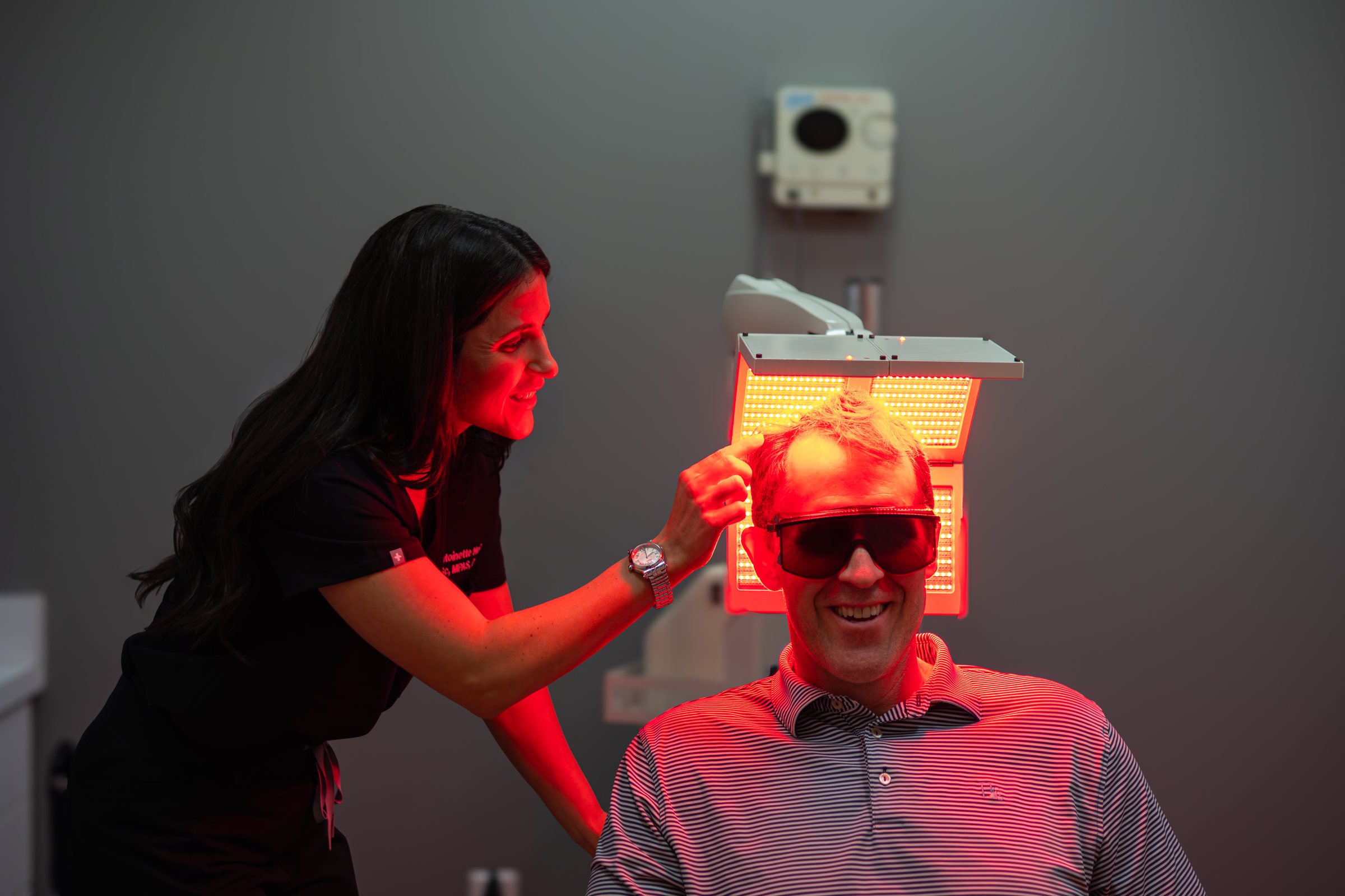
Red and near-infrared light delivered to the scalp from an in-office panel, to keep thinning follicles in their growth phase. A timed 15 to 30 minute session in a chair, nothing to recover from, and results that reward showing up.
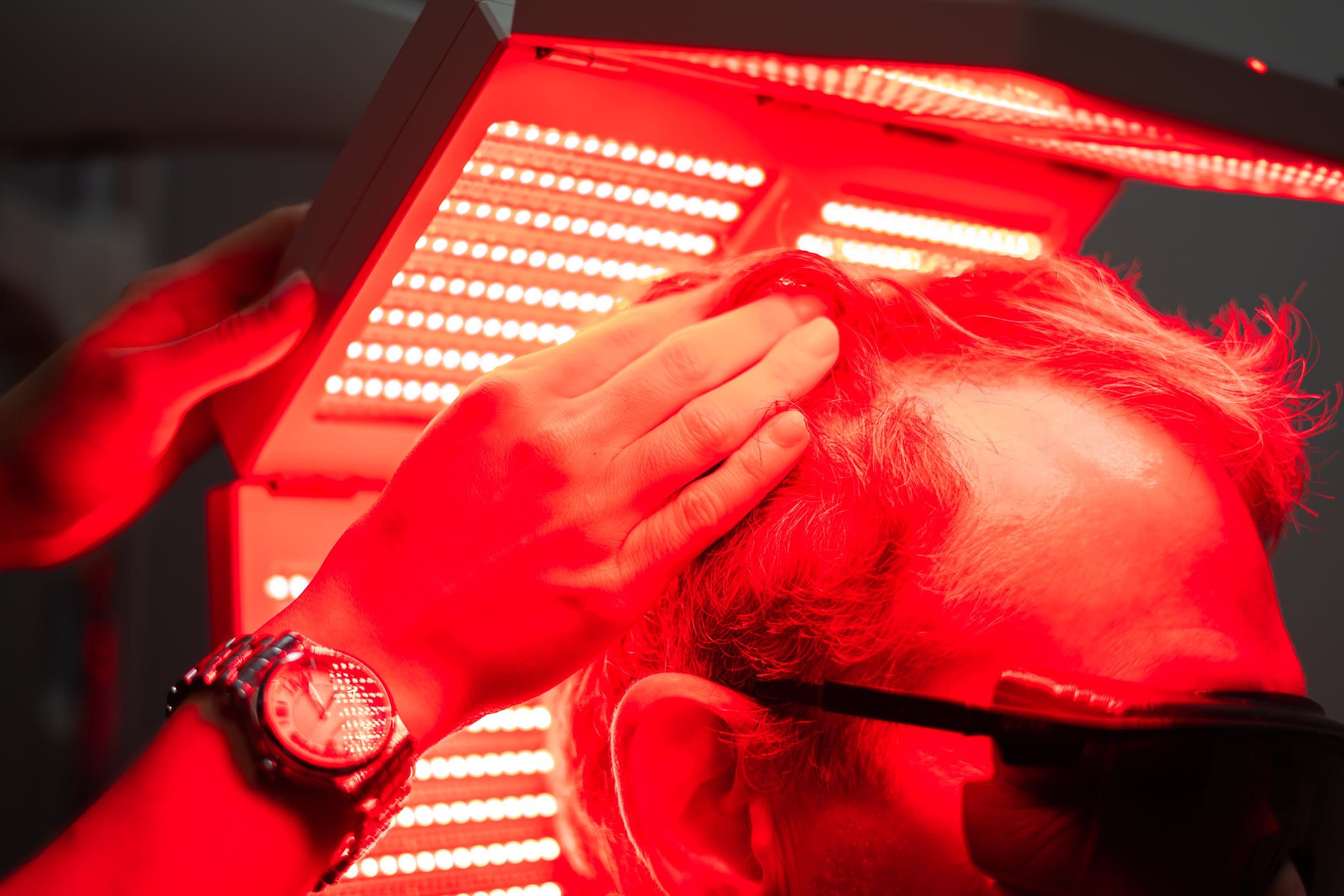
Fifteen to thirty minutes, no needles.
Book a consultWhat is red light therapy for hair?
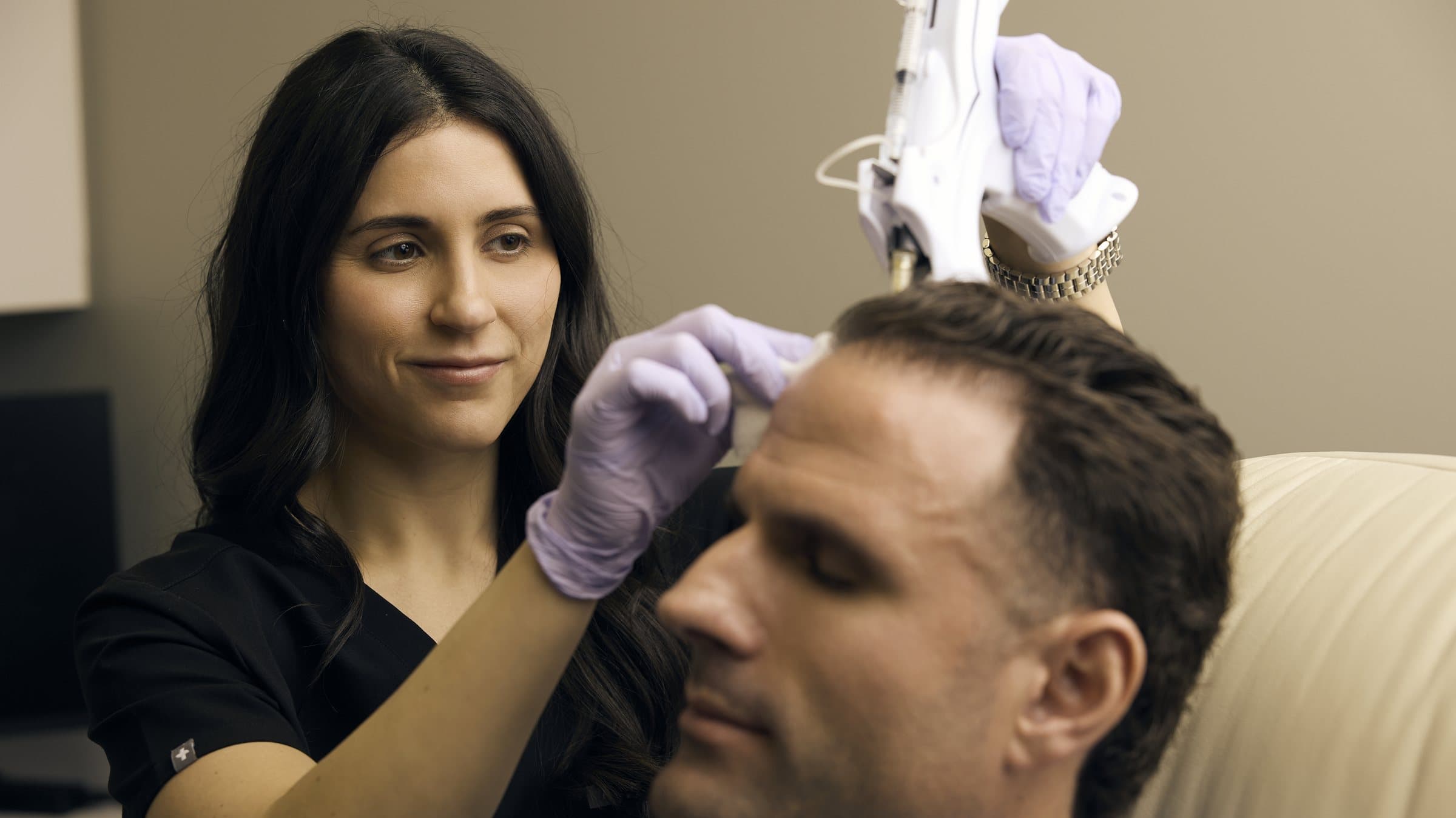
Low-level light therapy, also written LLLT and better known as red light therapy, uses red and near-infrared light from LEDs or low-power diode lasers, at wavelengths in the region of 630 to 680 nanometers. Light at that band is absorbed by the cells of the hair follicle, where it stimulates cellular activity and encourages the follicle to stay longer in its growth phase instead of slipping early into rest.
Devices of this class are FDA cleared for androgenetic alopecia, the pattern thinning that affects most men and a great many women. The light does not burn, heat or cut anything. You sit, the panel is positioned over your scalp, and you wear a pair of protective glasses for the duration.
On its own it is a gentle treatment, which is why it is rarely prescribed alone. Here it is usually paired with PRP hair therapy, prescription medication or a supplement, or used to support the grafts and the native hair around them after a transplant.
The practice runs the NeoGraft red light panel in its own treatment rooms, so the sessions happen under the same hair restoration team, and in the same plan, as everything else on this site's hair menu.
Sessions are timed, 15 to 30 minutes seated under the panel. There is nothing to prepare and nothing to do afterward, which makes it the easiest appointment on the hair menu to keep.
You feel a mild warmth at most. No redness, no tenderness, no restrictions afterward. Most patients go straight back to work.
Light therapy works by repeated exposure over months, not by a single dose. Your provider sets a schedule of regular sessions; a course that stops early is a course that did not happen.
Alongside PRP, medication or supplements for early thinning, or after a transplant to support healing and regrowth. As a stand-alone treatment it suits mild thinning in someone who wants to avoid injections and prescriptions.
For the patient who will keep showing up.Not for the one who wants it fixed by Friday.
Red light is the gentlest treatment on this menu, and that cuts both ways. It cannot bring back a follicle that is gone, it will not outrun advanced loss, and it does very little for anyone who comes twice and stops. What it does well is hold and thicken thinning hair for someone who treats it as a standing appointment.
 Model
ModelYour thinning is early or mild
A part that has widened, a crown that shows under bright light. Follicles that are shrinking, not gone, are the ones a light can reach.
You want to avoid needles
No injections, no prescriptions, nothing drawn or applied. For a patient not ready for PRP or medication, this is the honest first step.
You are already in a plan
PRP, medication, a supplement, a transplant on the calendar. Light therapy adds to all of them, and that is where it does its best work.
Your scalp is otherwise healthy
Active scalp infection, some photosensitising medications and certain skin conditions are reviewed first and can rule the treatment out.
You can commit for months
Regular sessions over a season before the change is visible. Someone who cannot make that schedule should say so at the consultation rather than start.
Five questions we are askedbefore almost every light therapy session.
For androgenetic thinning, devices in this class are FDA cleared, and the mechanism is well described: light in the red and near-infrared band stimulates follicle cells and lengthens the growth phase. It supports and thickens hair that is thinning; it does not create follicles where the scalp is already bald.
Yes. The light is low-level and non-thermal, so it does not burn or damage skin. You wear protective glasses during the session. Your provider reviews your medical history first, since some scalp conditions and light-sensitising medications need a different plan.
Regularly, over months. Your provider sets a schedule at the consultation and adjusts it as your scalp responds. Consistency matters more than any single session, which is why the schedule is agreed before you start.
Home devices exist and some patients use one between visits. The difference here is the panel, the supervision, and the plan: in-office sessions are part of a hair restoration program run by providers who can see whether it is working and change course if it is not.
Usually both, in most plans. PRP delivers growth factors into the scalp; light therapy keeps the follicles responsive between sessions. Which combination suits your loss, and whether medication or a supplement belongs in it, is what the consultation decides.