Hair Restoration in Pittsburgh
Robotic and automated FUE hair transplants that harvest follicles one at a time, so there is no strip, no linear scar, and a recovery measured in days. Regrowth begins around three to four months.
Considering a transplant?
Book a consultWhat is FUE hair restoration?
FUE, follicular unit extraction, harvests healthy hair follicles one by one from the back and sides of the head, where hair is not affected by the hormone behind male pattern baldness, and transplants them into thinning or balding areas. No strip of scalp is removed, so there is no linear scar to hide under a longer cut.
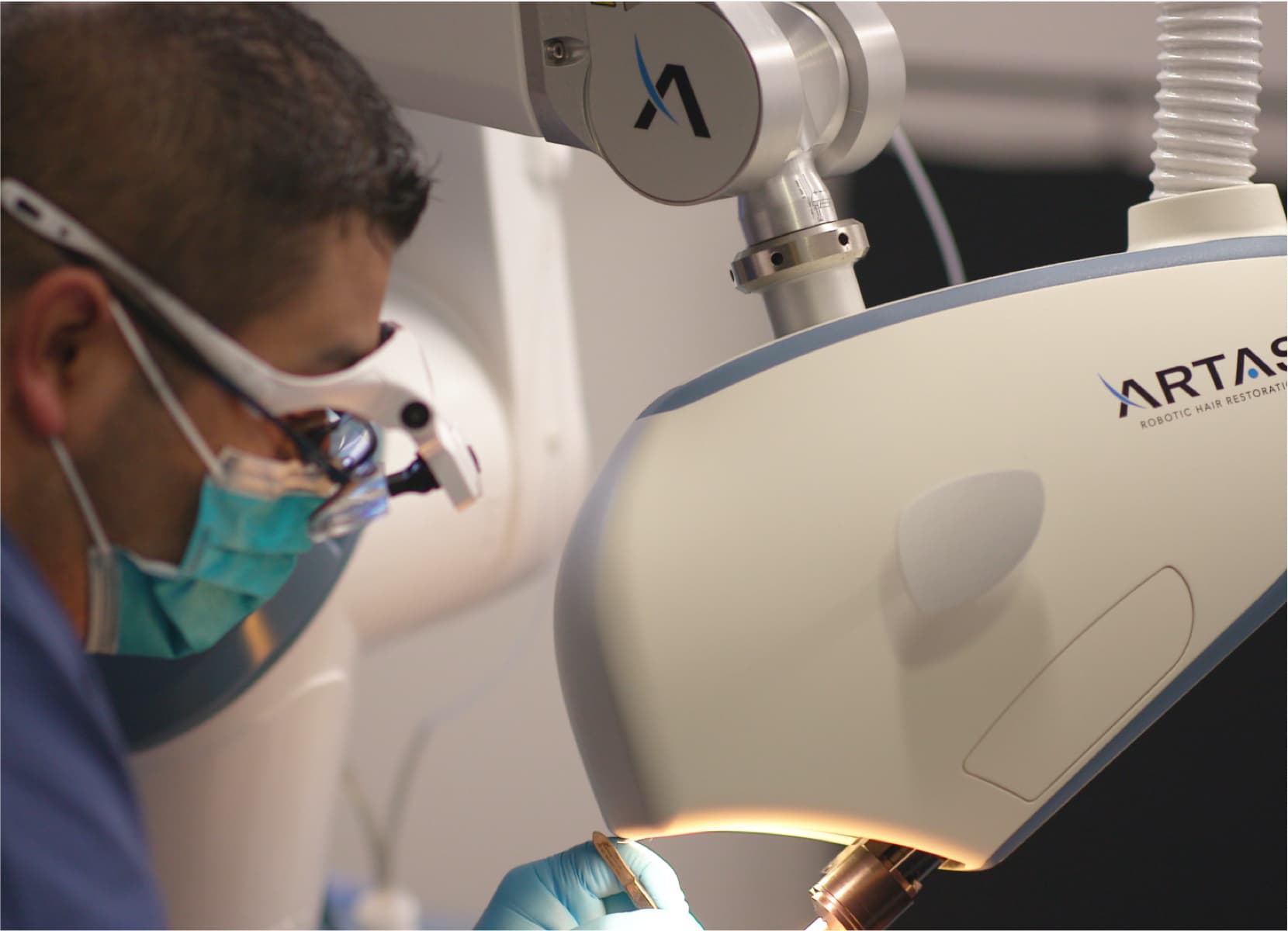
The practice runs the two most advanced FUE systems in use: ARTAS, a physician-assisted robot whose imaging software maps every follicle’s position, angle and size before a robotic arm harvests it, and NeoGraft, an FDA cleared automated system whose gentle extraction protects each graft. Neither over-harvests the donor area, which keeps the back of your head looking completely normal.
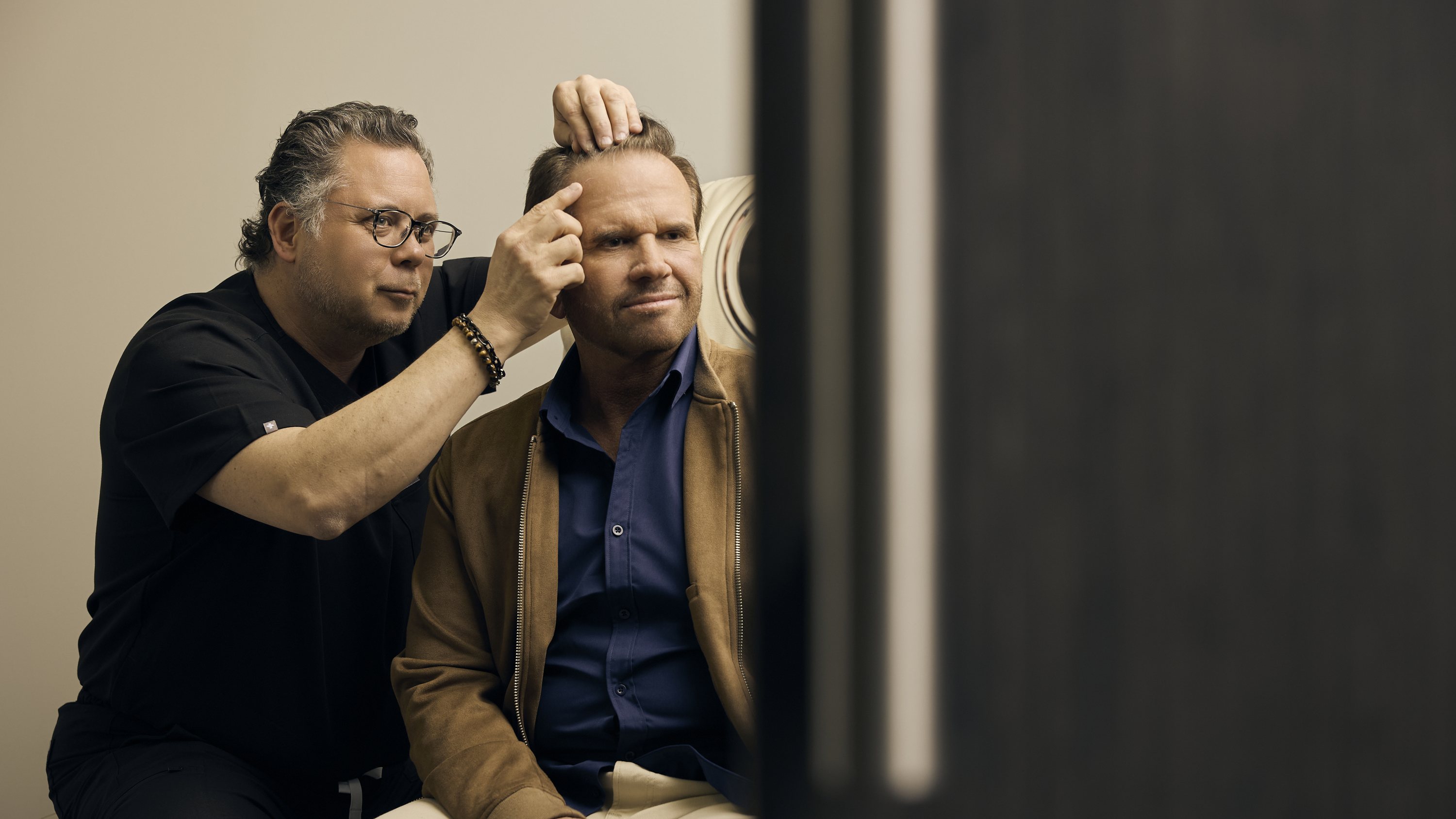
Your journey begins with a personal consultation with Dr. Heil, where you can share your goals, concerns, and what you hope to achieve. Together, you will create a personalized plan by hand, thoughtfully designed around you: your features, your hair, and the results that feel right for you.
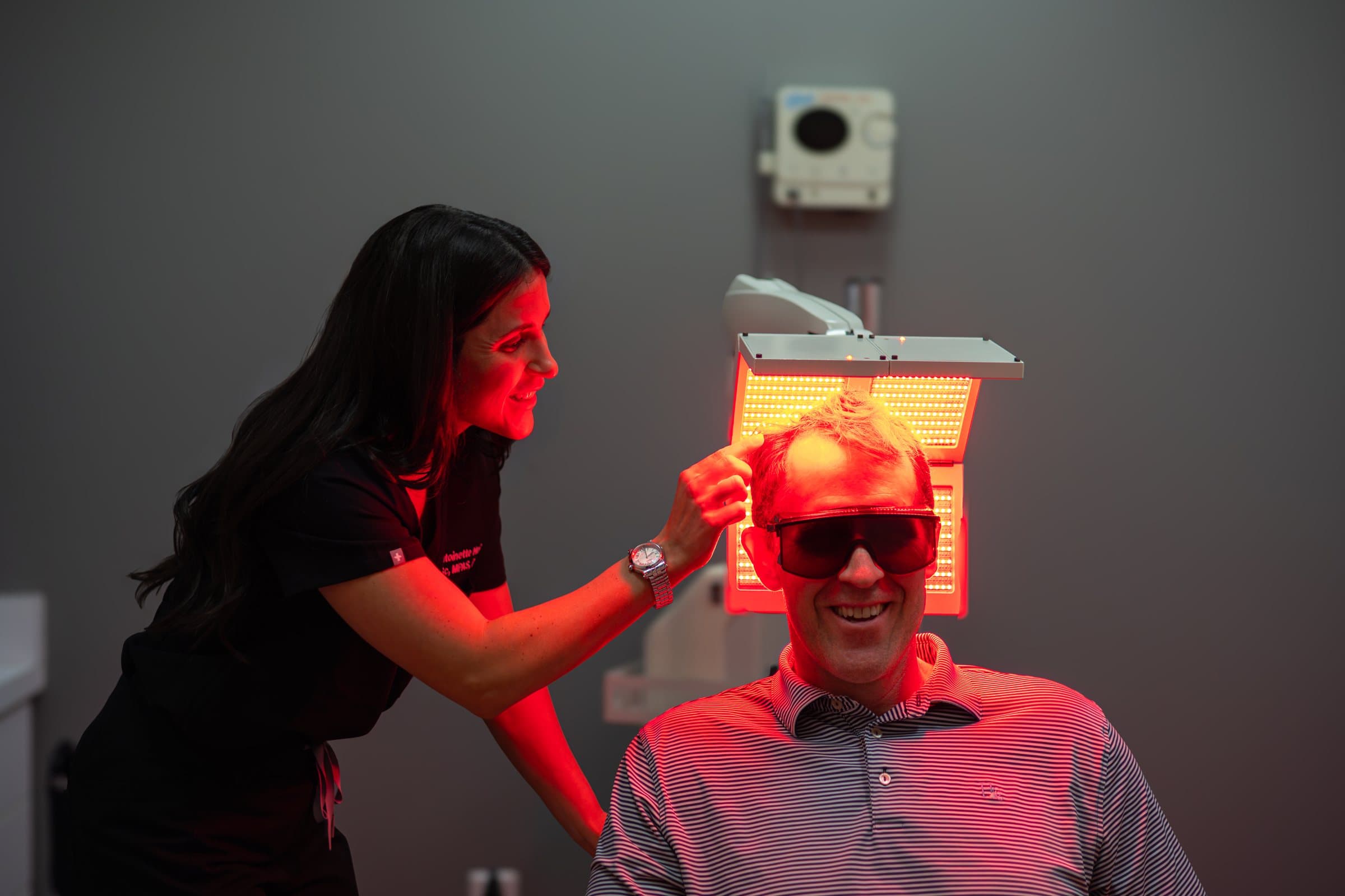
Not every consultation ends in a transplant. Early or diffuse thinning is often better served by PRP hair therapy and red light therapy, both offered in the same rooms, and a transplant plan can build on them later.
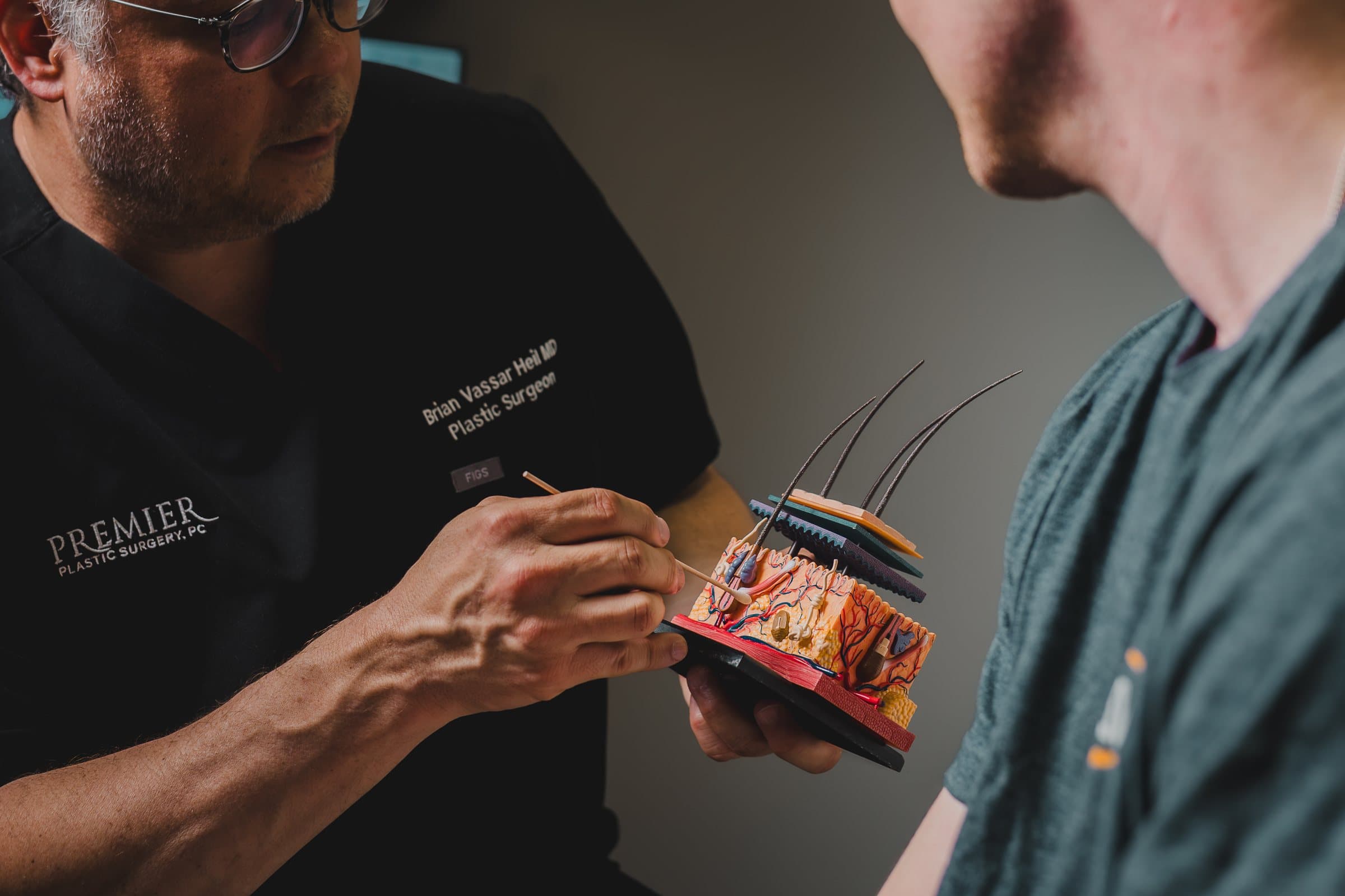
Every transplant here is designed and performed under Brian V. Heil, MD, FACS, a board certified plastic surgeon, with physician assistants who are hair restoration specialists, one of them a transplant patient himself.
Follicles are harvested individually rather than as a strip of scalp, so the donor area heals as scattered points that disappear into the surrounding hair. Short haircuts stay on the table.
Most patients are back to their routine within a week to ten days. Expect some redness, swelling and crusting at first; the transplanted hairs shed after a few weeks, which is a normal part of the cycle.
Follicles begin producing natural hair around three to four months after the procedure. Once growing, the hair is yours for the long term, and can be cut and styled like the rest.
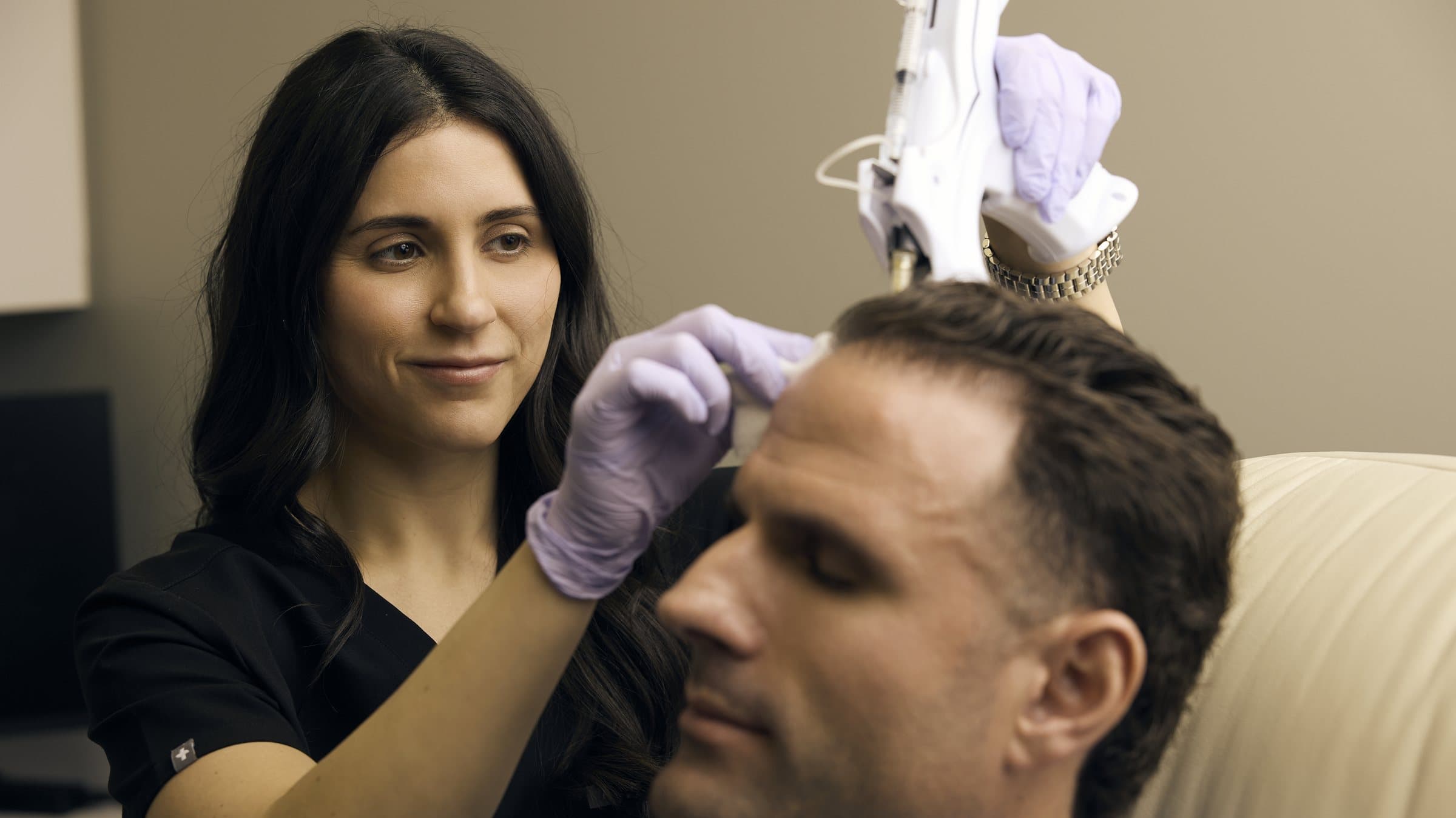
Where a transplant is not the right first step, the practice also offers PRP hair therapy, NeoGraft red light therapy and medical management of hair loss, alone or alongside a transplant plan. For home, the shelf carries Nutrafol, a physician-formulated hair growth supplement, and Plated Skin Science, a platelet-derived exosome line.
For hair loss you can map.Not every kind there is.
FUE moves healthy follicles from where you have them to where you do not, so it treats pattern hair loss with a stable donor area best. Diffuse thinning, some medical causes of loss, and very early recession often want medication or PRP first. Your consultation with Dr. Heil decides which you are.
 Model
ModelYour loss has a pattern
A receding hairline, a thinning crown, or a balding area with healthy hair behind it: the classic shapes of pattern loss respond best to transplantation.
Your donor hair is healthy
The back and sides of your head supply the grafts. Dense, healthy hair there is what makes a natural result possible.
You want it undetectable
Customized robotic harvesting and a custom hairline design are what separate modern FUE from the plugs and strip scars of older methods.
You may not need surgery yet
Early recession is often better held with medication, PRP or light therapy. If that is the honest answer at your consultation, it is the one you will get.
You can give it a season
Shedding, then regrowth from three to four months, with the full result over the following year. This rewards patience, and repays it permanently.
64 documented patients.
Every plate below is the practice’s own, photographed before treatment and after regrowth. Four of the newest are here; the other 60 are in the gallery.
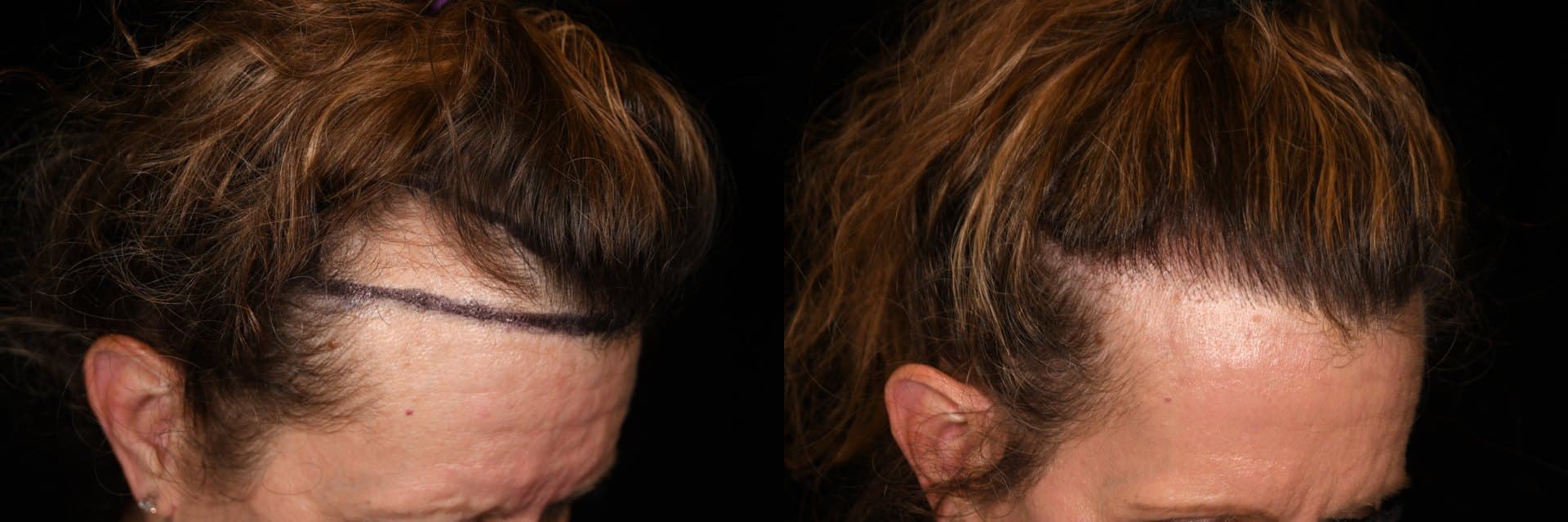
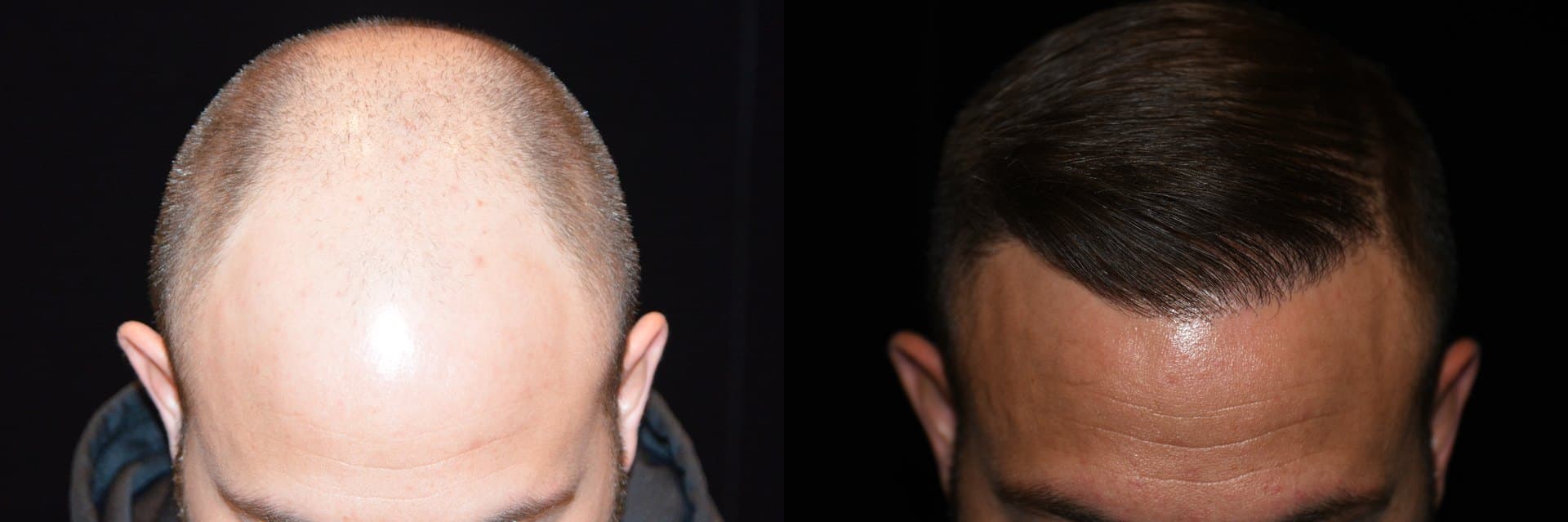
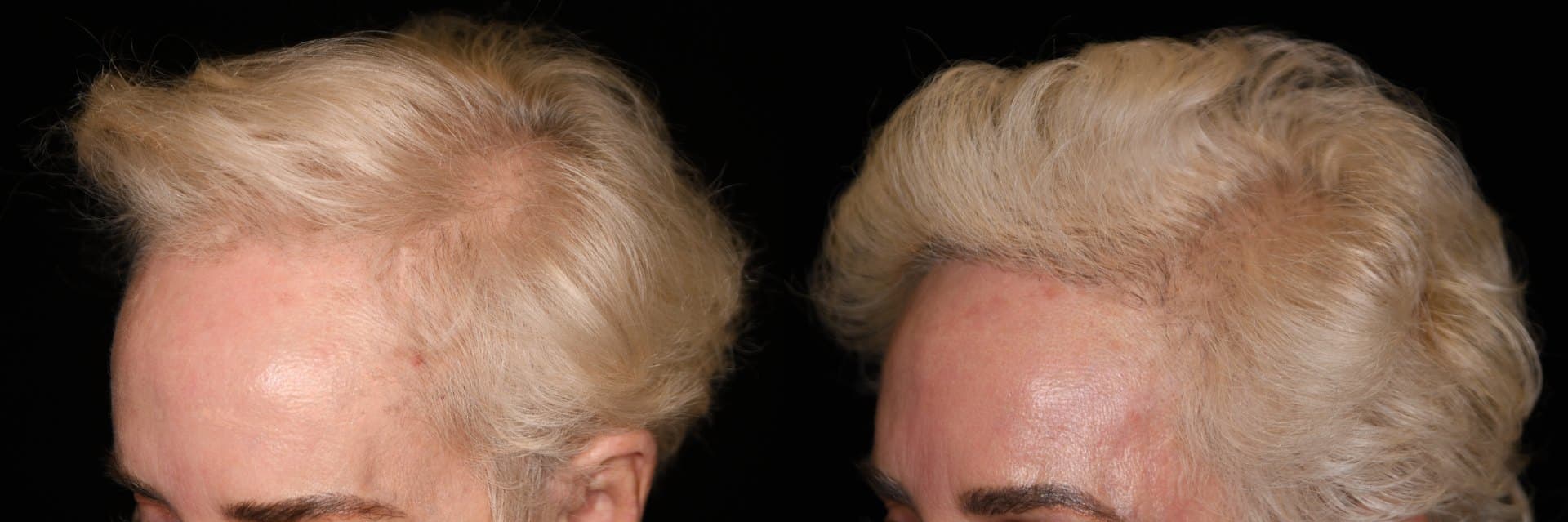
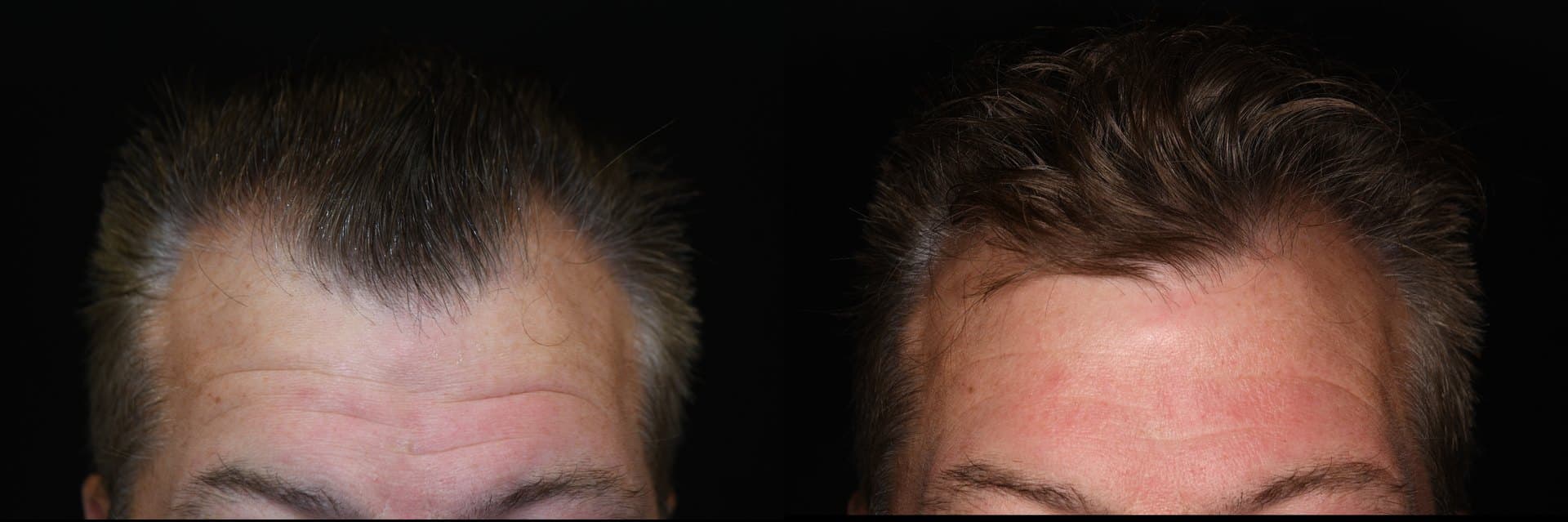
Photographs are of hair restoration patients treated under Dr. Heil, published by the practice. Individual results may vary.
Not ready for a transplant?
Most hair loss is caught while there are still follicles to save. Two treatments here work on those, without surgery, and both are performed by the same hair restoration team.
A robot harvests. A surgeon decides.
The machine is the famous part: a robotic arm that reads the position, angle and orientation of every follicle before touching one, then harvests in a customized pattern no human hand could keep up with.
But a transplant is designed, not just performed. Where the hairline sits, how it frames your face, which follicles are worth moving: those calls are made by Dr. Heil, a board certified plastic surgeon, and executed with physician assistants who specialize in hair restoration, including providers trained on ARTAS robotic and NeoGraft systems.
Their own site states it plainly: this is the only practice in the tri-state area offering the ARTAS system.
One of those physician assistants is also a transplant patient. When your provider has sat in the chair himself, the conversation about expectations gets refreshingly honest.
Six questions we are askedbefore almost every hair consultation.
Follicular unit extraction harvests healthy follicles one at a time from the back and sides of the head instead of cutting away a strip of scalp. That means no linear scar, less discomfort, and a faster recovery, and it keeps short haircuts possible afterward.
Both are effective FUE systems. ARTAS adds a physician-assisted robot: imaging software maps every follicle and a robotic arm harvests in a customized pattern, so no area of the scalp is over-harvested. NeoGraft is a gentler automated hand-held system. The consultation decides which suits your scalp.
That is the entire design goal. Follicles are implanted at the correct angle along a hairline Dr. Heil designs by hand, and the customized harvest keeps the donor area looking normal. The rows-of-plugs look belongs to older methods.
Typically a week to ten days of redness, swelling and crusting. The transplanted hairs shed after a few weeks, which is normal and expected, and the follicles begin producing natural hair at three to four months.
Sometimes both, sometimes medication first. Early recession can often be held with medication, PRP hair therapy or NeoGraft red light therapy, all offered here, and a transplant plan can build on them later. The consultation maps your loss and gives you the honest sequence.
Yes. Female hair loss patterns differ, and candidacy depends on the cause of the loss and the health of the donor area, so the evaluation matters even more. The same consultation and FUE systems apply.