PRP Hair Therapy in Pittsburgh
Your own blood, spun down to the platelets and growth factors, then placed back into the scalp where hair is thinning. Under an hour per session, no real downtime, and regrowth that builds over the following months.
Thinning, not bald yet?
Book a consultWhat is PRP hair therapy?
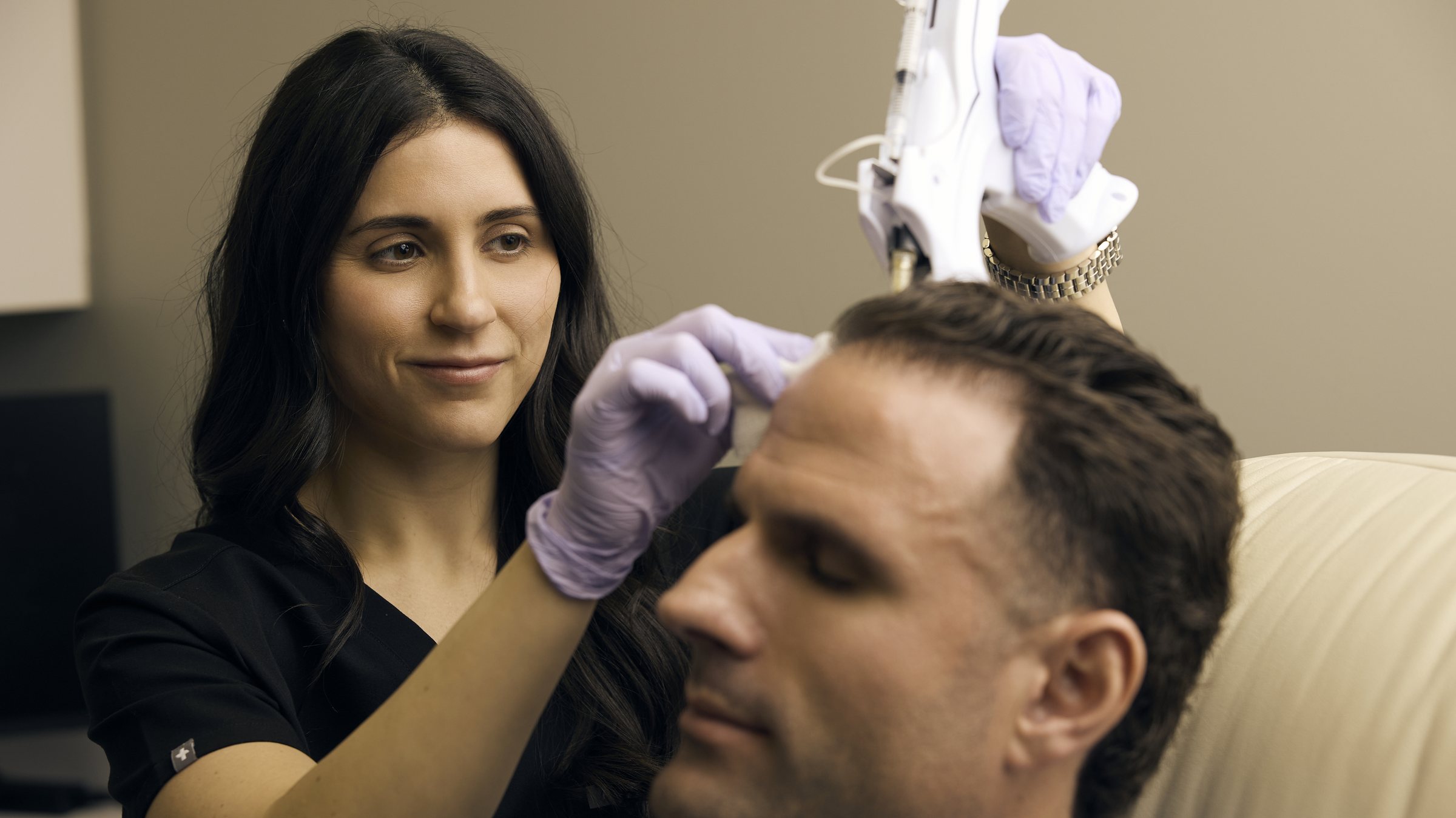
PRP stands for platelet rich plasma. A small amount of your blood is drawn, exactly as it would be for a routine lab test, and spun in a centrifuge that separates it into layers. The layer rich in platelets, and in the growth factors platelets carry, is drawn off and injected into the areas of your scalp where hair is thinning.
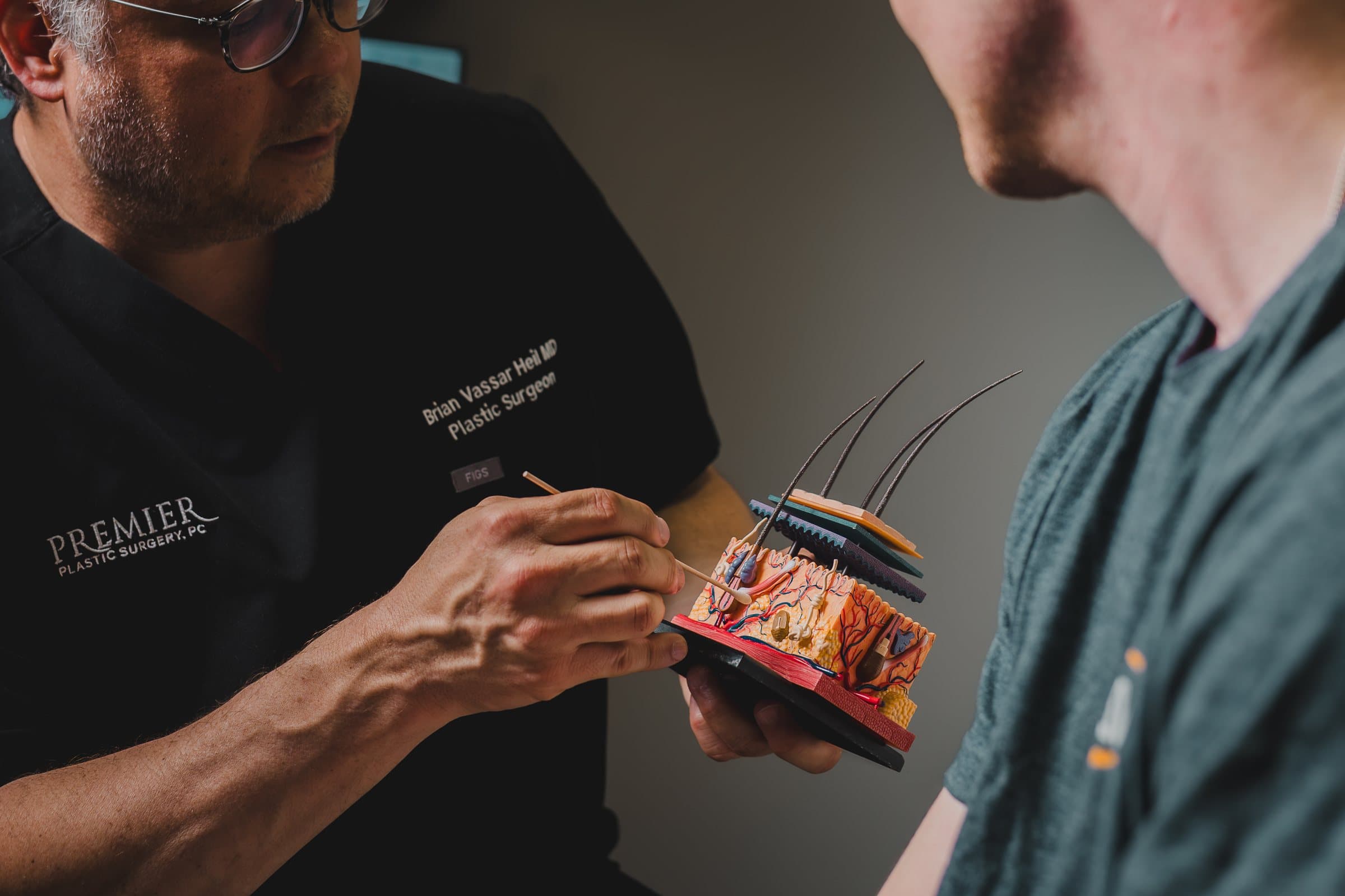
Those growth factors are the same ones your body uses to heal a wound. Delivered to a follicle that is shrinking but still alive, they encourage it to spend longer in its growth phase and produce a thicker, healthier strand. That is why PRP suits thinning hair so well, and why it does nothing for a scalp that is already smooth: there has to be a living follicle to wake up.
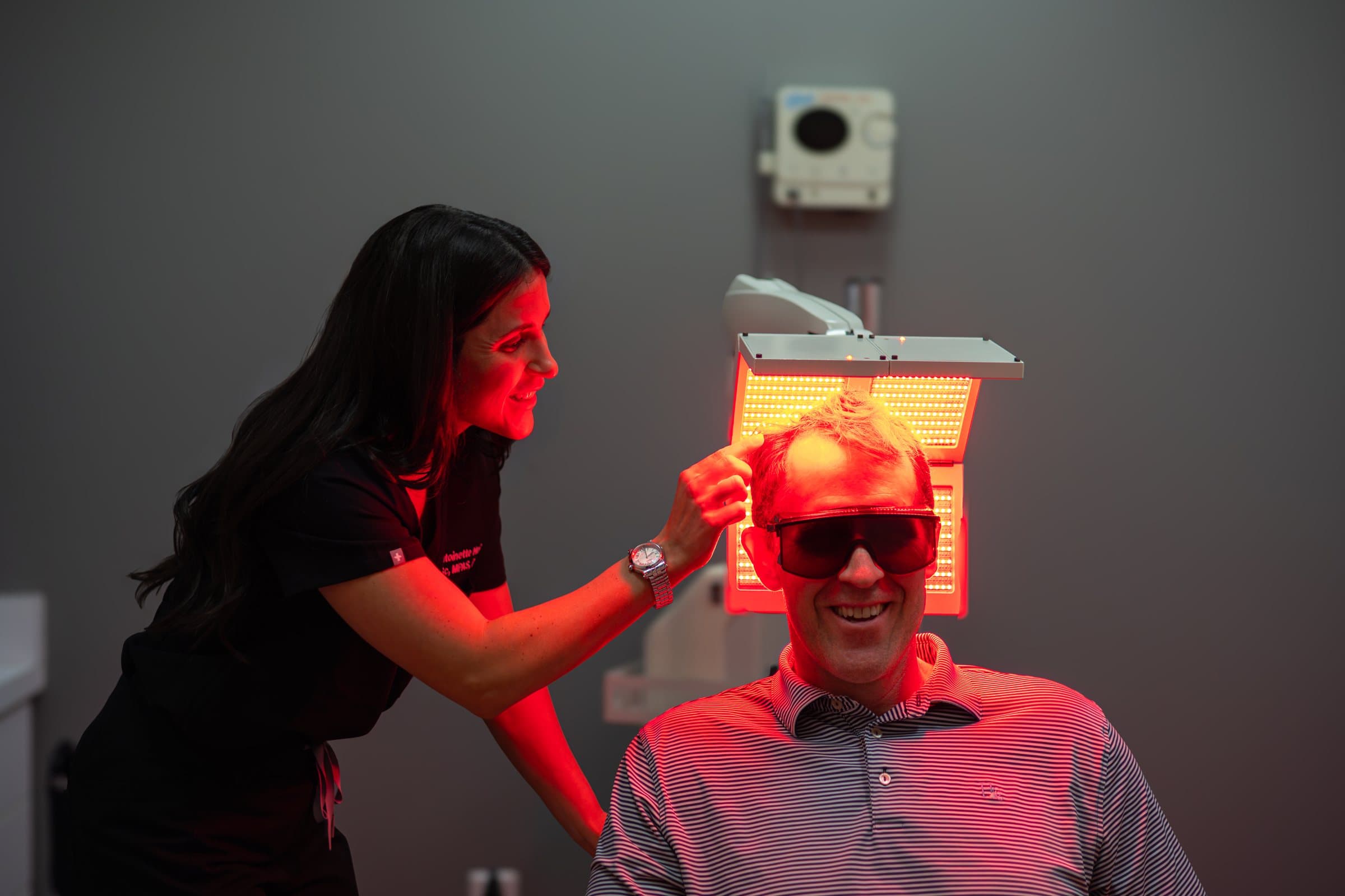
It is used for pattern thinning in men and women, and to support the grafts after a hair transplant. Most patients pair it with something: medication, the red light therapy offered in the same rooms, or a supplement from the shelf at the front desk. The consultation decides the combination.
PRP here is performed by physician assistants who do hair restoration every week, trained under Dr. Heil.
The usual plan is three sessions spaced about four to six weeks apart, followed by a maintenance session once or twice a year to hold the result. Your provider sets the schedule against how your scalp responds.
The blood draw, the spin and the injections fit inside a single visit of well under an hour. Numbing is available for the scalp, and most people find the injections more strange than painful.
Expect a tender scalp and some pinpoint redness for a day or so. You can go back to work the same afternoon. Skip a hard workout, hats that rub, and hair colour for a day or two.
Hair grows slowly, so PRP shows slowly. Shedding usually eases first, over the first couple of months, and visible thickening builds over three to six months as the treated follicles cycle back into growth.
For the follicles you still have.Not the ones you have lost.
PRP wakes up follicles that are shrinking, not ones that are gone. It treats thinning hair with a living root best, and a bald patch of shiny scalp hardly at all. If your loss has already moved past thinning, a transplant is the honest conversation, and this page is not the one to start from.
 Model
ModelYour hair is thinning, not gone
A widening part, a crown that shows more scalp under bright light, a hairline that has thinned rather than retreated: these have follicles to work with.
You caught it early
The sooner a shrinking follicle gets the signal to grow, the more it has left to give. Early thinning responds best, and in men and women alike.
You are comfortable with a blood draw
Every session starts with one. It is the same small tube a routine lab test takes, and it is the only thing about PRP that is not already yours.
Your blood count is normal
Platelet disorders, blood thinners, active infection and some chronic conditions rule PRP out or change how it is planned. Your medical history is reviewed first.
You can wait for hair to grow
Three sessions over a few months, then several more before the result is obvious. Patients who want a change by next week are better served elsewhere on this site.
One patient, four angles.
A platelet rich plasma patient of the practice, photographed before the series began and again after regrowth. Front, crown and both sides, on the practice’s own signed plates. No transplant was involved.
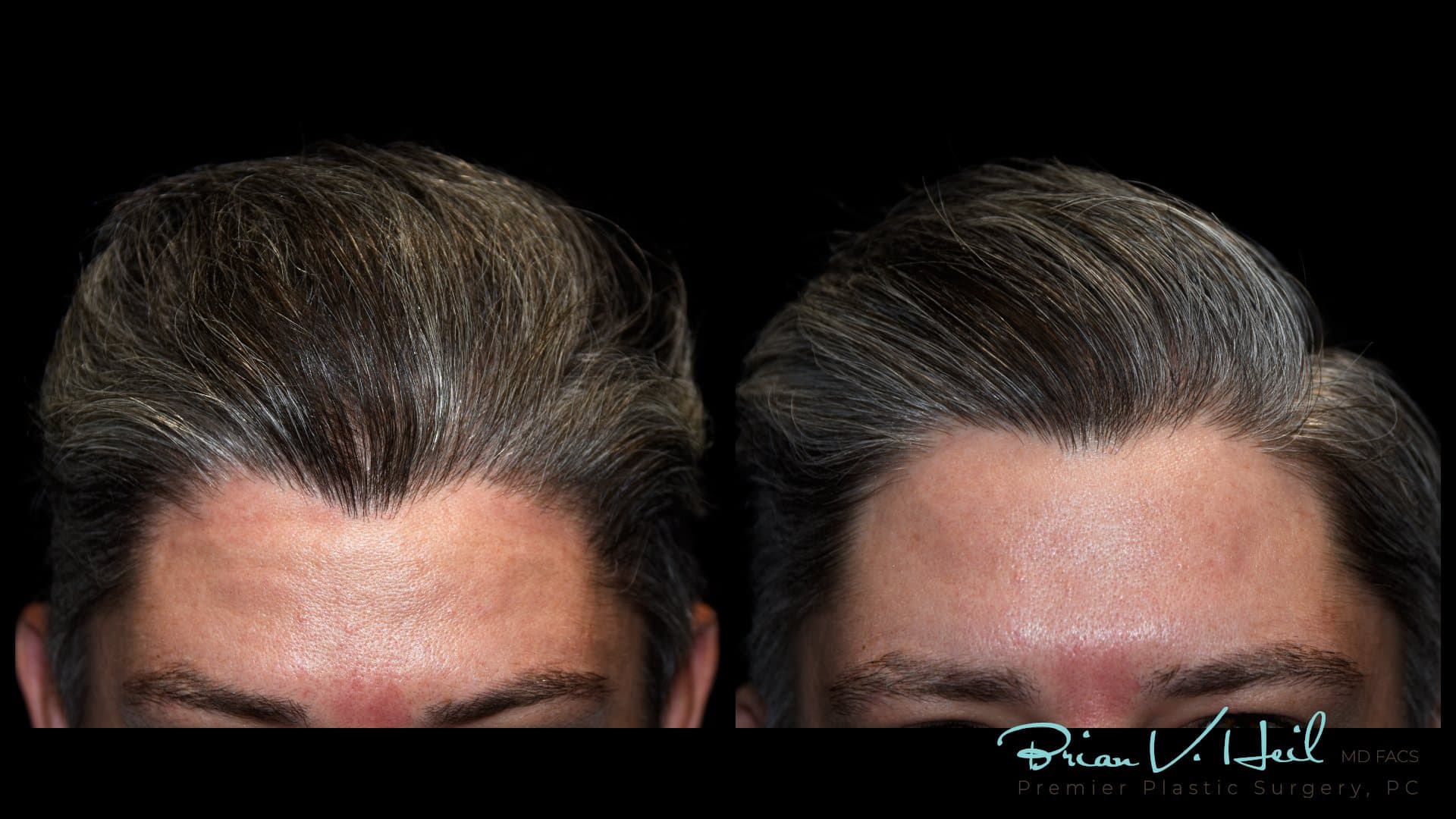
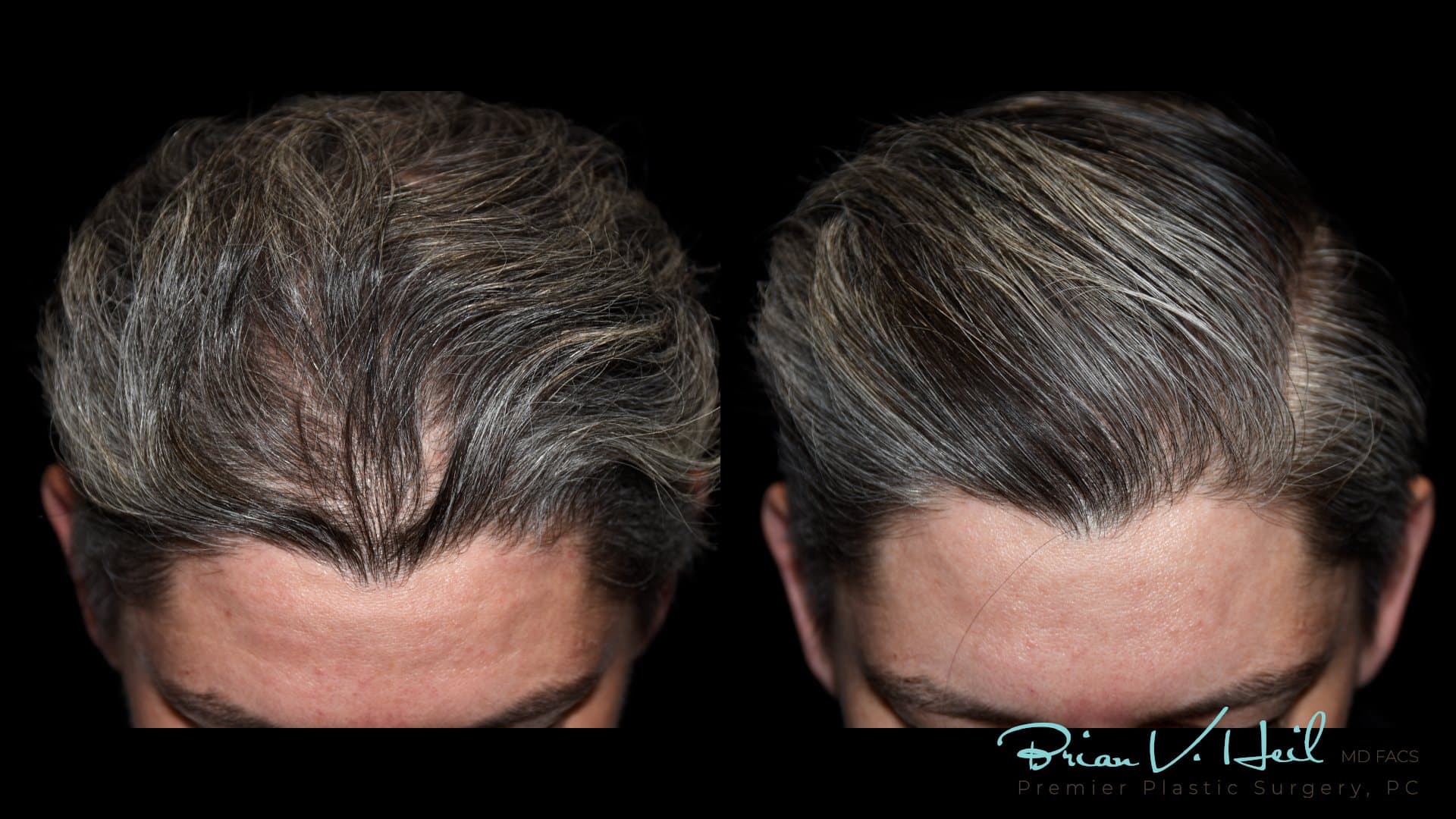
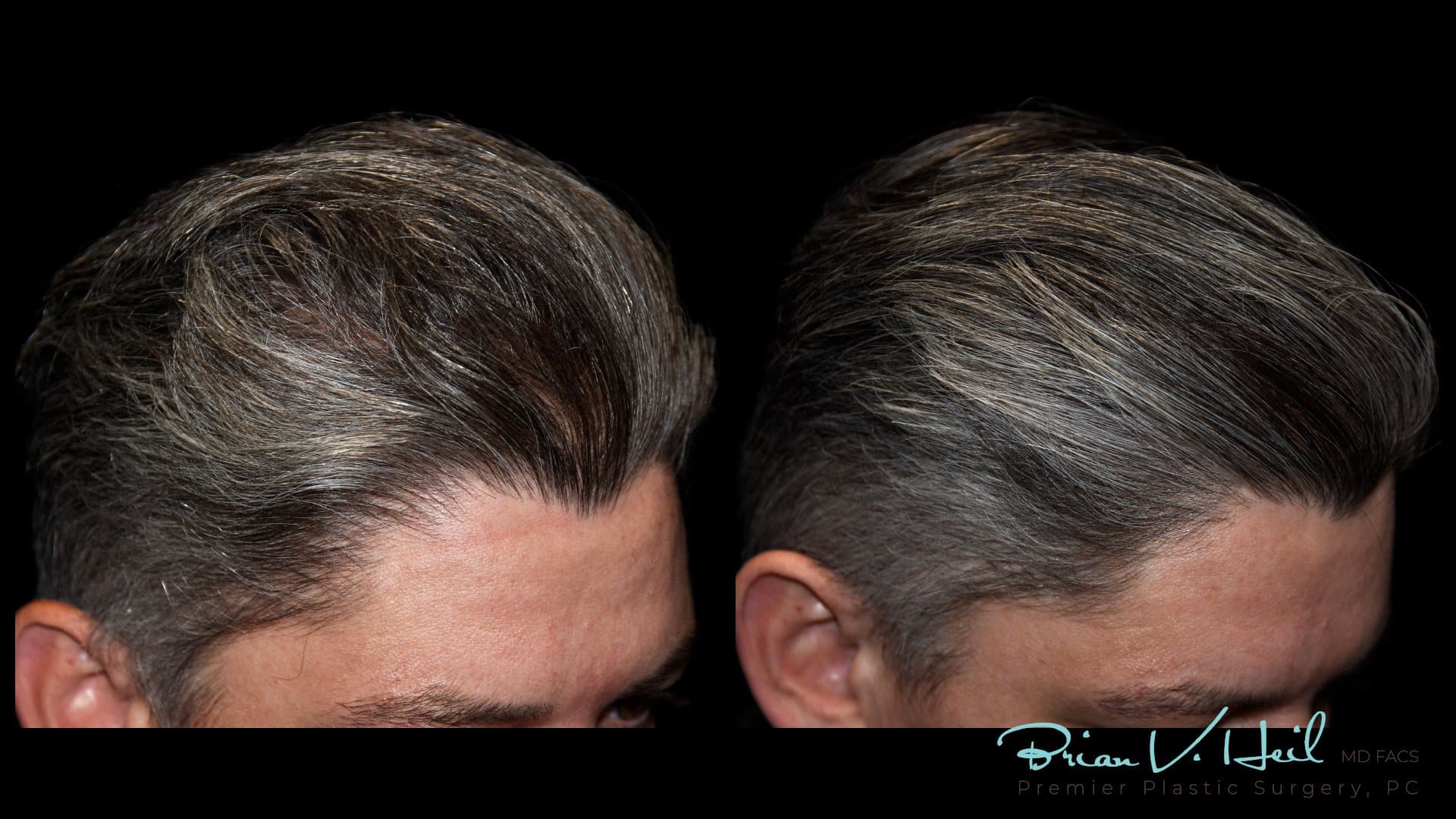
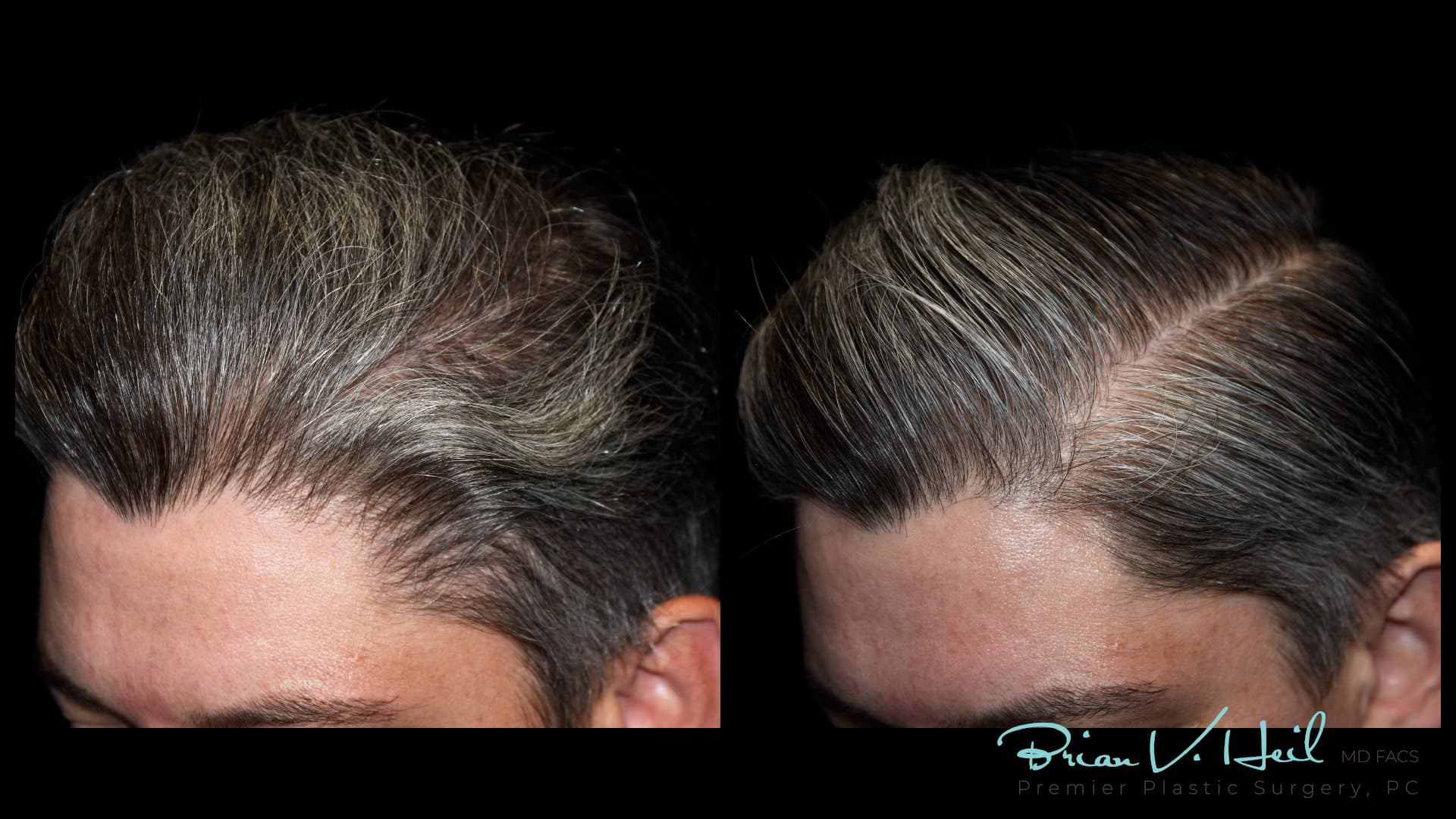
Photographs are of an Acqua Blu patient, published by the practice. Individual results may vary.
Honest medicine.Honest numbers.
Book a consultA series of three platelet rich plasma sessions. Sold individually a session is $825, and maintenance sessions after the series are $650. The consultation maps your loss and confirms the plan before anything is scheduled.
Every plan is priced at a consultation before anything is scheduled. No deposits, no surprises.
What you do between sessions counts.
Three injections a few weeks apart are the treatment. The other twenty-three hours of every day are where a result is kept or lost, which is why your provider will usually send you home with something.
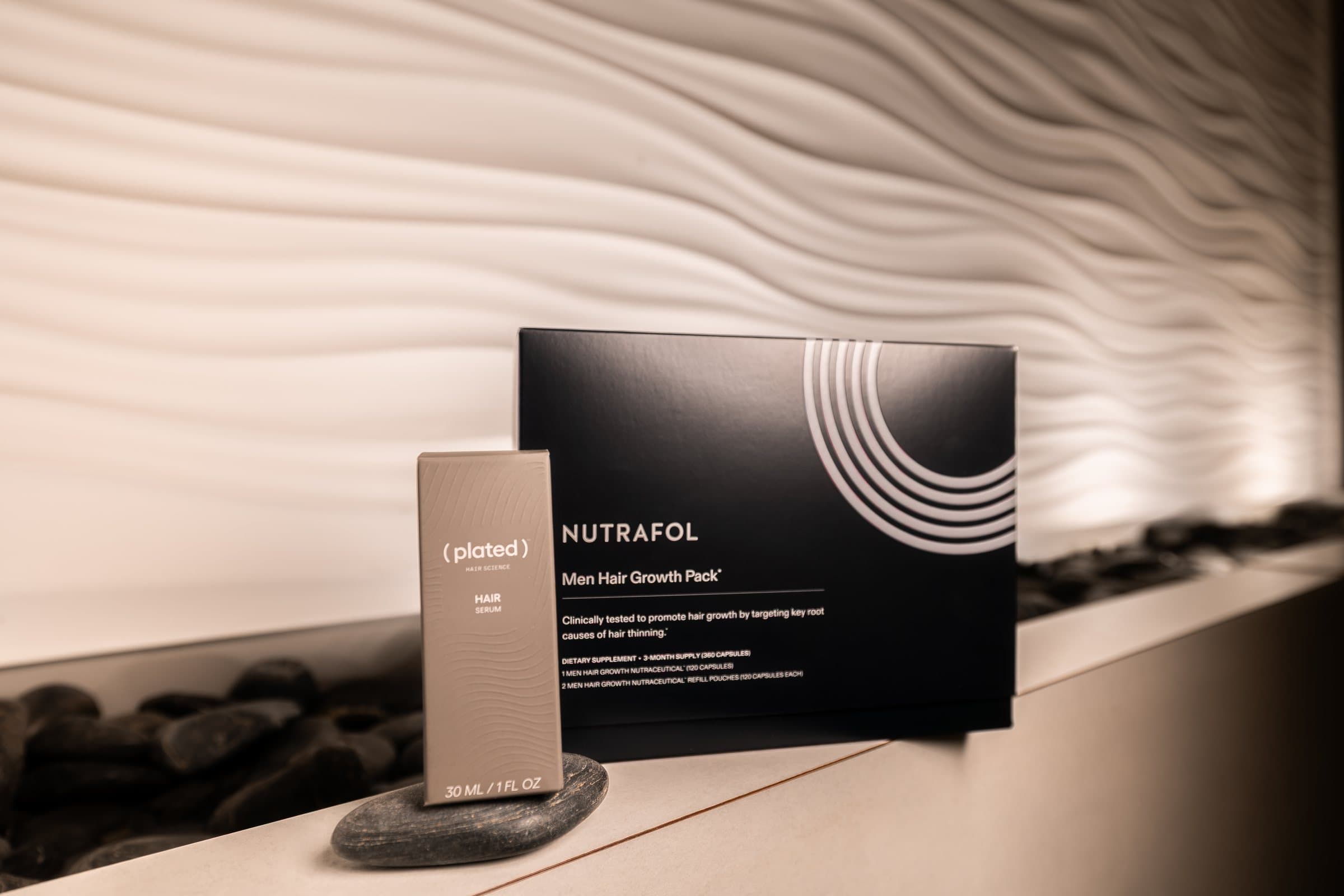
Nutrafol is a physician-formulated hair growth supplement that targets the causes of thinning from the inside, with separate formulas for men and women. The practice carries it in office, so it can be matched to your plan rather than guessed at online.
Plated Skin Science is a product line built on platelet-derived exosomes, the signalling particles platelets release, applied topically to extend the same regenerative idea PRP works on. Also on the shelf here, and your provider will tell you honestly whether it belongs in your plan.

Five questions we are askedbefore almost every PRP consultation.
For thinning hair with living follicles, it is one of the better supported non-surgical options, and it is the one hair surgeons use around their own transplants. It does not create follicles where none remain, and it works best as part of a plan rather than on its own. The consultation tells you where you fall.
A series of three, about four to six weeks apart, is the standard starting plan. After that, most patients hold their result with a maintenance session once or twice a year. Your provider adjusts the schedule to how your scalp responds.
The blood draw is a routine lab draw. The scalp injections are brief and can be numbed first; most people describe pressure and an odd tightness rather than real pain. Tenderness for a day afterward is normal.
Hair grows about half an inch a month, so nothing about this is fast. Shedding often settles within the first couple of months, and visible thickening builds over three to six months as treated follicles return to their growth phase.
Yes, and it usually is. PRP supports transplanted grafts and the native hair around them, and it pairs with prescription medication, in-office red light therapy and supplements such as Nutrafol. The plan is built at the consultation from whichever of those fit you.