CO2 Laser Resurfacing in Pittsburgh
The deepest resurfacing we offer: an ablative laser that removes damaged skin in a fine pattern of columns so fresh skin heals in from between them. One treatment does most of the work, and asks for about a week in return.
Considering CO2 resurfacing?
Book a consultWhat is CO2 laser resurfacing?
A CO2 laser produces light at 10,600 nanometers, a wavelength that water absorbs almost completely. Since skin is mostly water, each pulse vaporizes a precise amount of tissue exactly where it lands, taking away the surface that carries the damage and setting off a healing response that lays down new collagen beneath it.
Fractional delivery is what makes the modern version practical. Instead of removing the whole surface, the laser treats a pattern of microscopic columns and leaves the skin between them untouched. That intact skin is what the treated columns heal from, which is why recovery runs days rather than the weeks the old full-field CO2 lasers demanded.
It is the strongest tool in the practice for etched lines, especially around the mouth and eyes, for acne and surgical scarring, for sun damage, rough texture and laxity. Depth and density are adjustable, and they are set region by region rather than once for the whole face.
A single CO2 treatment usually delivers most of the result, unlike lighter lasers that build it over a series. That is the trade this page is honest about: more change in one visit, and a real recovery to plan around.
Etched lines around the mouth and eyes, acne and surgical scars, sun damage, rough or crepey texture, and mild to moderate laxity. Concerns that lighter lasers and good skincare have stopped moving.
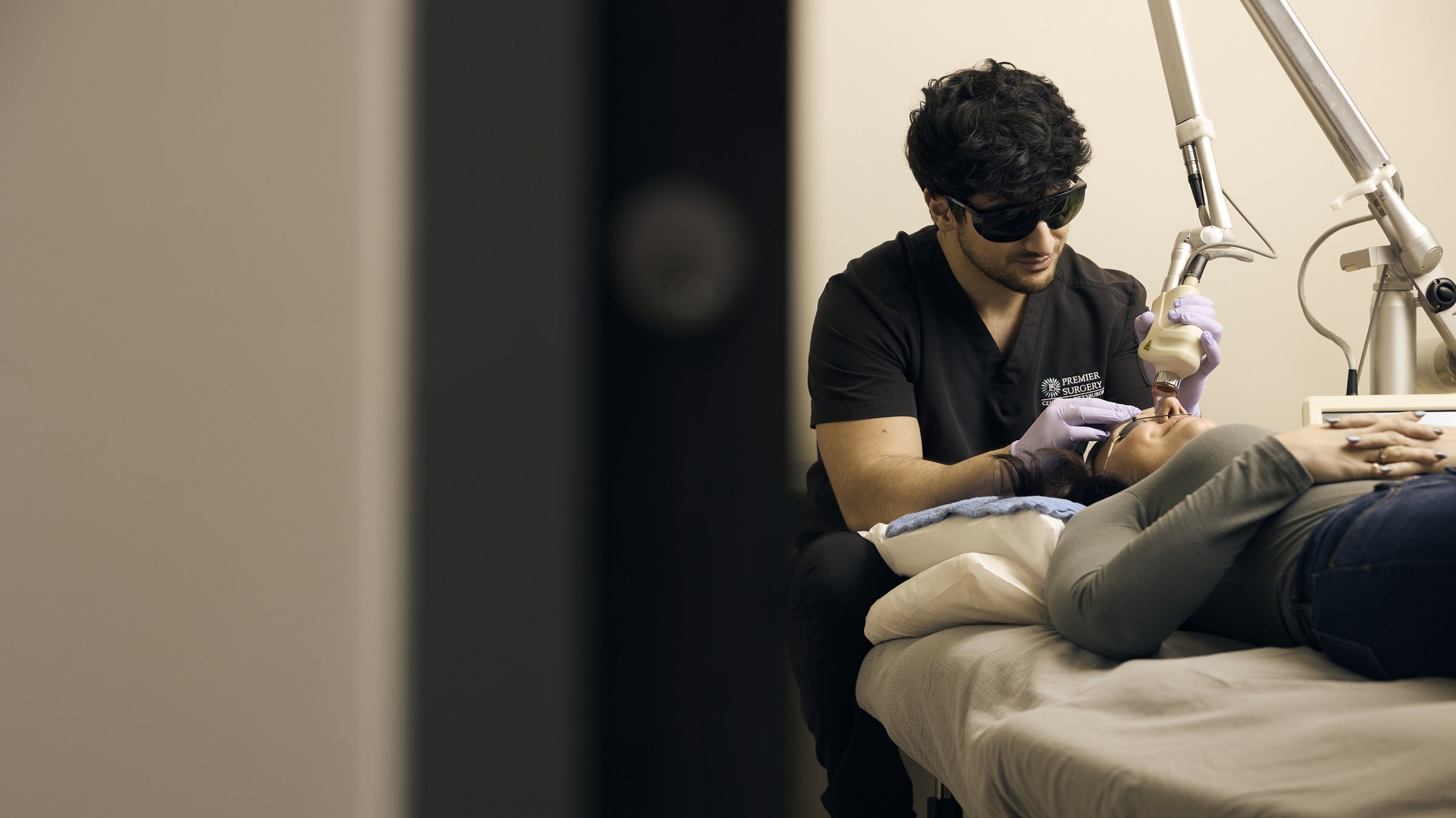
The area is numbed, topically and sometimes more, before the provider passes the handpiece over the skin in a measured pattern. Most people describe heat and stinging during, and a strong sunburn sensation for the rest of the day.
About five to seven days of redness, swelling, crusting and peeling, during which you follow a simple wound care routine at home. Pinkness fades over the following few weeks as the new skin settles.
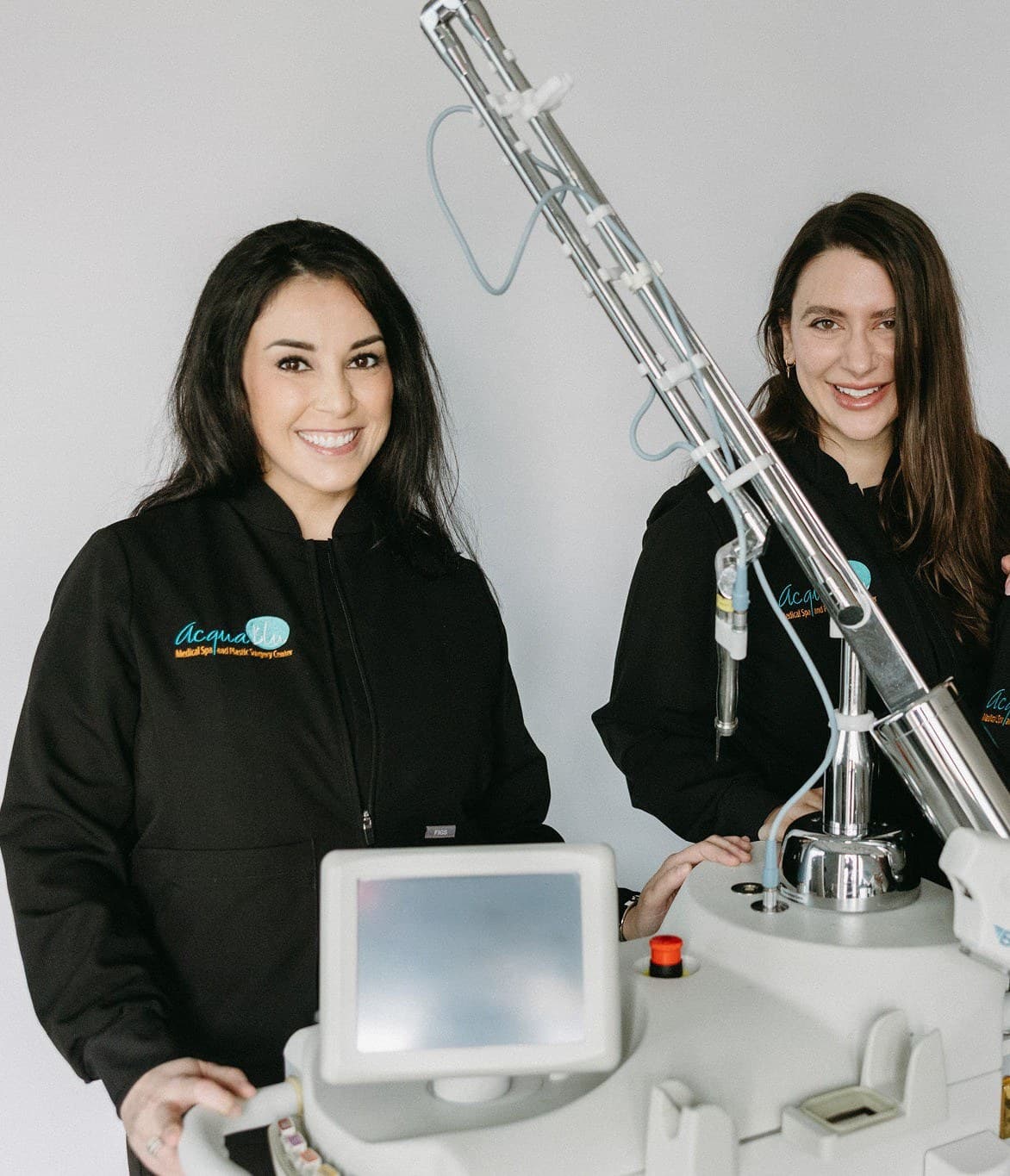
A provider trained by Dr. Heil, a board certified plastic surgeon. Depth, density and the treatment map are decided at a consultation that reviews your skin type, history and goals first.
The deepest result.Planned the most carefully.
CO2 does the most of any laser here, which is exactly why it is chosen last rather than first. The consultation weighs what your skin can safely take, what your calendar can give it, and whether a gentler treatment would get you most of the way with less to recover from.
 Model
ModelYour concern is etched in
Lines that stay when your face is at rest, scars with real depth, texture the sun has roughened. CO2 reaches the problems that live in the structure of the skin, not just its tone.
Lighter treatments have plateaued
If HALO, MOXI, peels or a good skincare routine have stopped moving the needle, this is the step up. If you have not tried them, the consultation may suggest starting there.
You can give it a week
Five to seven days of visible healing, then a few weeks of fading pinkness. Book it well clear of anything photographed, and clear of travel or heavy sun.
You will protect it afterwards
Freshly resurfaced skin burns and pigments easily. Strict sun protection for the weeks after is part of the treatment, not an optional extra.
Your history has been reviewed
Skin type, tendency to scar or pigment, any history of cold sores and current medications all change the plan, or rule it out. That review happens at consultation, before anything is scheduled.
Before, and after healing.
Every plate below is the practice’s own: patients photographed before their CO2 treatment and again once the skin had settled, signed by the treating provider. Four are here; the rest are in the gallery.
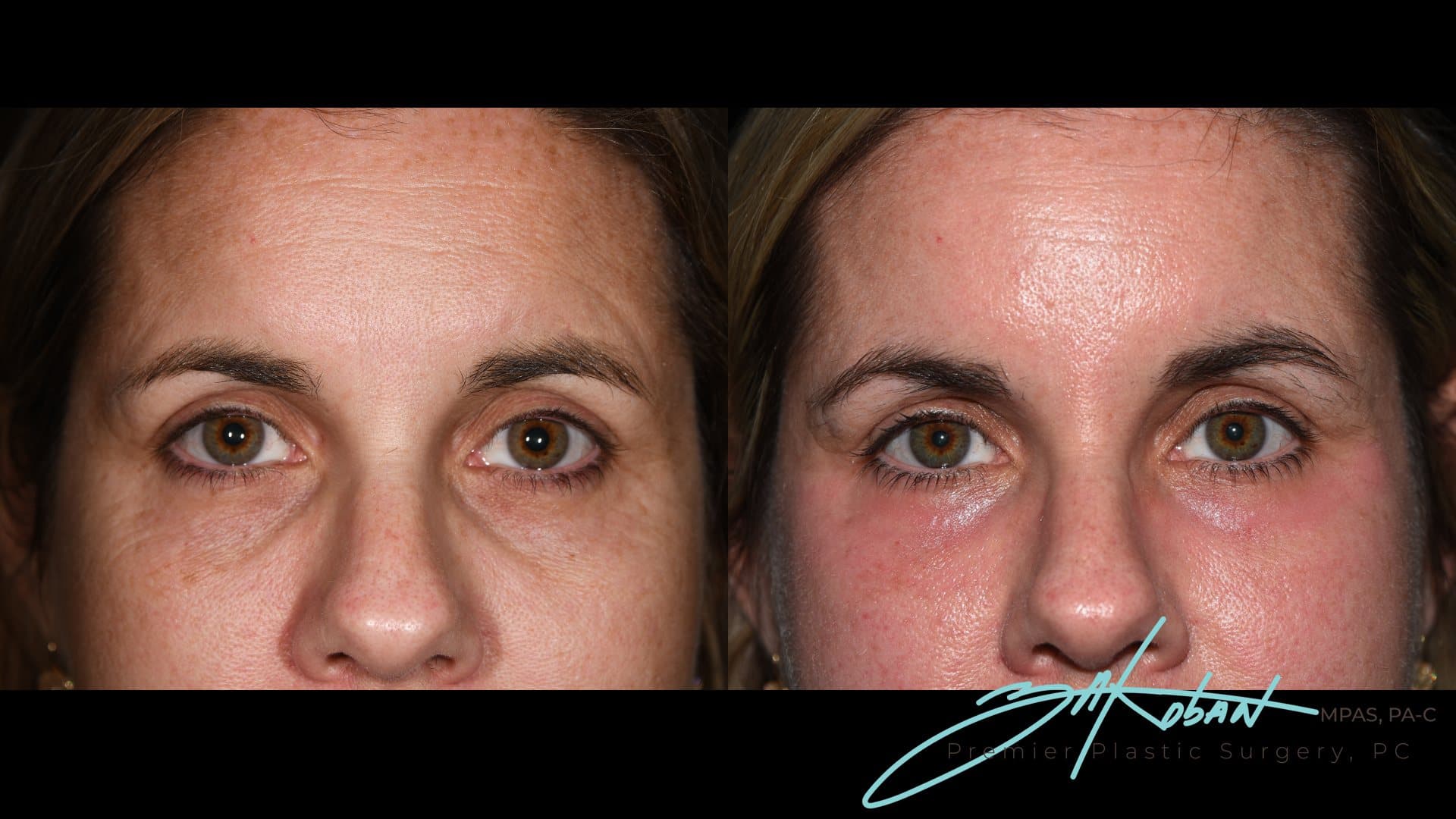
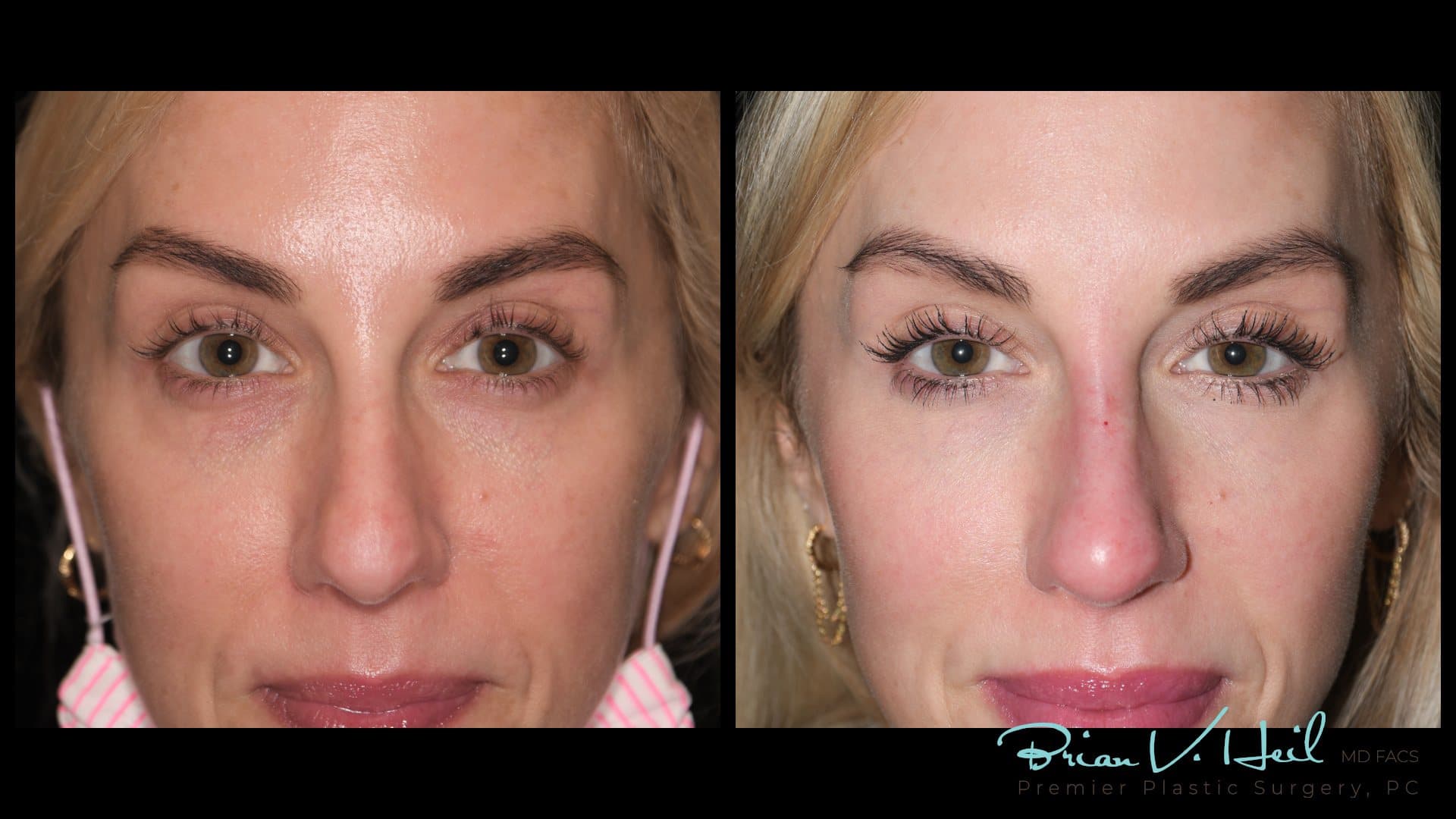
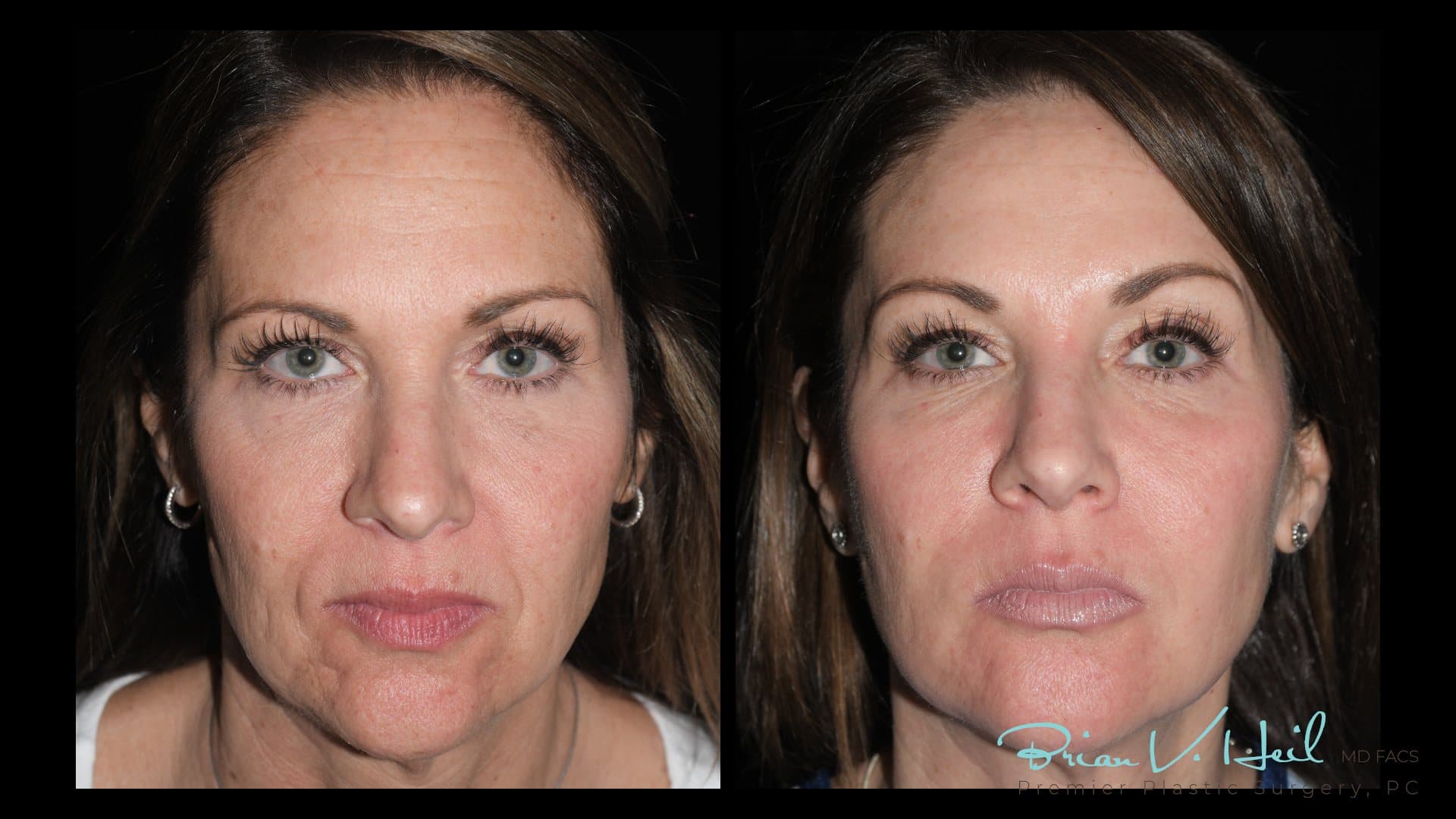
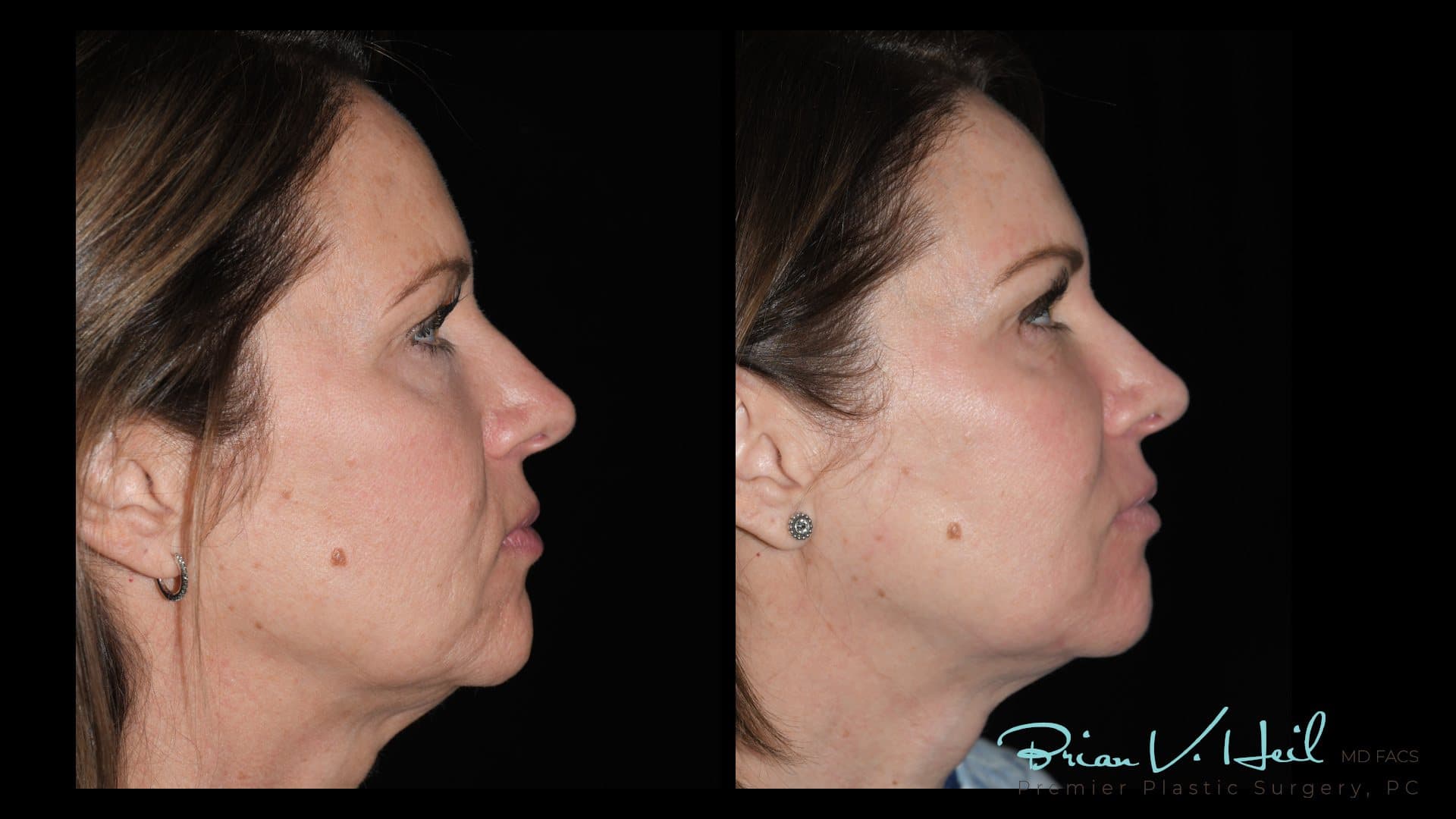
Photographs are of Acqua Blu patients, published by the practice. Individual results may vary.
Settings changewith every inch.
CO2 depth and density are chosen region by region, not set once for the whole face. Skin thickness, the damage in it and how quickly it heals all vary across inches, and the laser is turned up and down to match.
Select any marker to see how the settings are chosen there.
Five questions we are askedabout CO2 resurfacing.
The wavelength is the same; the delivery is not. Older lasers removed the entire surface and needed weeks of open healing. Fractional CO2 treats a pattern of microscopic columns and leaves healthy skin between them, so the treated skin heals from its neighbors in about a week while still reaching the depth that makes CO2 effective.
Typically five to seven days of redness, swelling, crusting and peeling, with a simple at-home care routine through it. The skin stays pink for a few weeks afterwards and fades steadily. You will be given a specific expectation for your settings before you commit.
Numbing is used, topically and sometimes more depending on the depth planned. Most people describe heat and stinging during the passes and a strong sunburn sensation for the rest of the day, which settles over the first night.
Usually one. CO2 delivers most of its result in a single session, which is the main reason to choose it over lighter lasers that build a result over a series. Deep scarring or very sun-damaged areas are occasionally treated a second time once the first has fully healed.
HALO combines ablative and non-ablative wavelengths in one pass and is our usual answer when someone wants broad improvement in tone and texture with a few days of recovery. CO2 goes deeper on etched lines and scarring specifically, at the cost of a longer week. Which suits you depends on what is bothering you most and what your calendar allows.