
The gold standard for crow's feet, forehead lines, and frown lines, delivered by injectors trained by Dr. Heil.
Botox
Lines that deepen and cheeks that quietly deflate are the two faces of the same process. Here is how our injectors and lasers divide the work, and how to tell which side of it you are on.
Fine lines, volume loss, and skin laxity are natural parts of aging, but they don't have to define how you look or feel. The first distinction worth learning is the one our injectors reach for at every consultation: dynamic wrinkles are caused by repetitive muscle movement, like squinting or frowning, while static wrinkles are present at rest, etched in by years of repetition and collagen loss.
The distinction matters because the treatments split the same way. Neuromodulators quiet the muscles behind dynamic lines; lasers and dermal fillers address the lines and deflation that have settled into the skin itself. Many patients need a little of both, which is exactly what a consultation with Dr. Heil's team sorts out.

Sound familiar?
Book a consult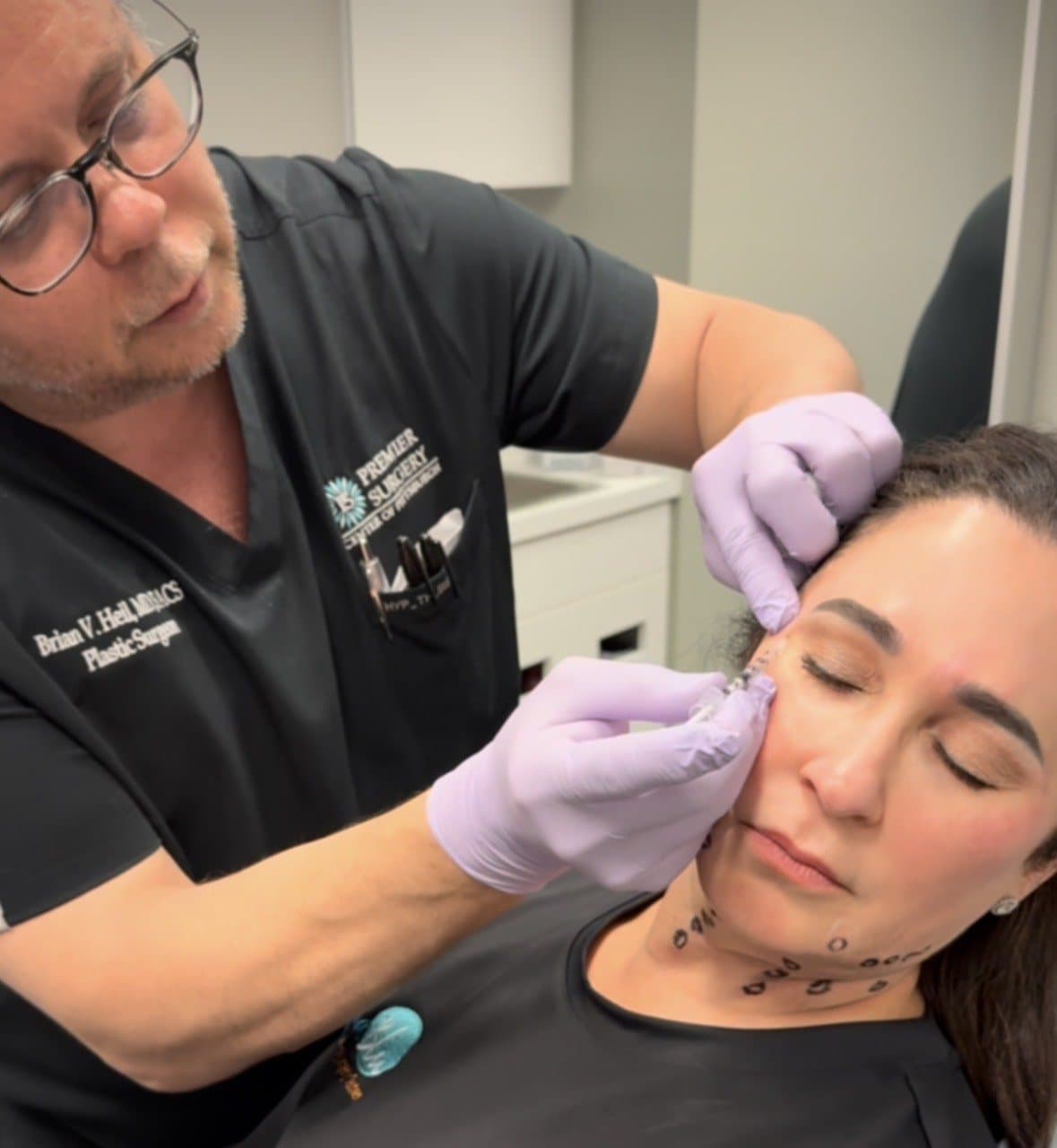
Botox remains the gold standard for dynamic wrinkles. A few precise injections temporarily relax the targeted muscles, softening crow's feet, forehead lines, and frown lines while your expressions stay your own; our injectors are trained by Dr. Heil to deliver natural, balanced results. Dysport works on the same mechanism and gives patients a second neuromodulator to compare at consultation.
Volume loss is a hallmark of facial aging, and dermal fillers are one of the most effective ways to restore it. The Juvederm family is formulated by area: Voluma restores mid-face and cheek volume, Volbella addresses the lips and under-eye area, and Vollure targets nasolabial folds, marionette lines, and smile lines. Restylane covers the same territory with its own line, and Refyne and Defyne are built for the laugh lines that move most, flexing with your expressions instead of stiffening against them.
The lasers work on the skin itself. HALO is the signature: a hybrid fractional laser combining ablative and non-ablative wavelengths in a single treatment, targeting the deep dermis and the surface at once to stimulate collagen and reduce fine lines. CO2 laser resurfacing is the most powerful tool in the set for deeper wrinkles and sun damage, and Sciton MOXI is the gentle fractional option for the earliest stages of skin aging.
The honest first question is which kind of lines you are carrying. Dynamic lines respond to neuromodulators, and starting Botox before wrinkles become deeply etched can slow their progression. Static lines and lost volume want fillers, lasers, or a combination; most hyaluronic acid fillers last between 6 and 18 months, with high-movement areas like the lips metabolizing faster than the cheeks.
Between the lasers, intensity is the axis. HALO delivers moderate-to-advanced correction with a manageable recovery; CO2 resurfacing trades about a week of downtime for the deepest repair; MOXI suits early aging, maintenance, and patients with minimal downtime available. Lasers improve texture and tone rather than replacing lost volume, so deeper deflation still points to filler or a combination approach.
None of this is a one-visit purchase. Results are maintained with a consistent at-home routine built on broad-spectrum SPF, plus periodic touch-up Botox, filler, or a MOXI session. The consultation is where our team reads your lines at rest and in motion, then builds a plan that reflects your goals rather than a menu.
Listed in the order we most often recommend them. Your consultation decides which actually fits your skin, goals, and downtime.
The gold standard for crow's feet, forehead lines, and frown lines, delivered by injectors trained by Dr. Heil.
Botox
The second neuromodulator on the menu: same mechanism as Botox, its own dosing character.
Dysport
The newest relaxer, formulated to hold frown lines longer between visits; in trials the median was about six months.
Daxxify
A filler family formulated by area: Voluma for cheeks, Volbella for lips and under-eyes, Vollure for folds.
Juvéderm
The other major hyaluronic acid line, matched to the same territory with its own textures.
Restylane
Flexible fillers built for laugh lines, moving with your expressions instead of stiffening them.
Refyne & Defyne
The signature hybrid fractional laser: deep collagen work and surface renewal in one treatment.
HALO
The gentle fractional laser for early lines, maintenance, and minimal downtime.
Sciton MOXI
The most powerful option for deeper wrinkles, sun damage, and uneven texture.
CO2 laser resurfacingThis page is general information, not medical advice. Which treatment fits your skin and history is a clinical decision made at a consultation with our providers.